ServicesWell Water Filtration
Well Water Filtration and Treatment in Buda, TX
A private well gives you water that no utility has touched, so whatever the rock puts in it reaches your taps. We test first, then build a filter setup matched to your results and your well's flow rate, and we install it at no charge.
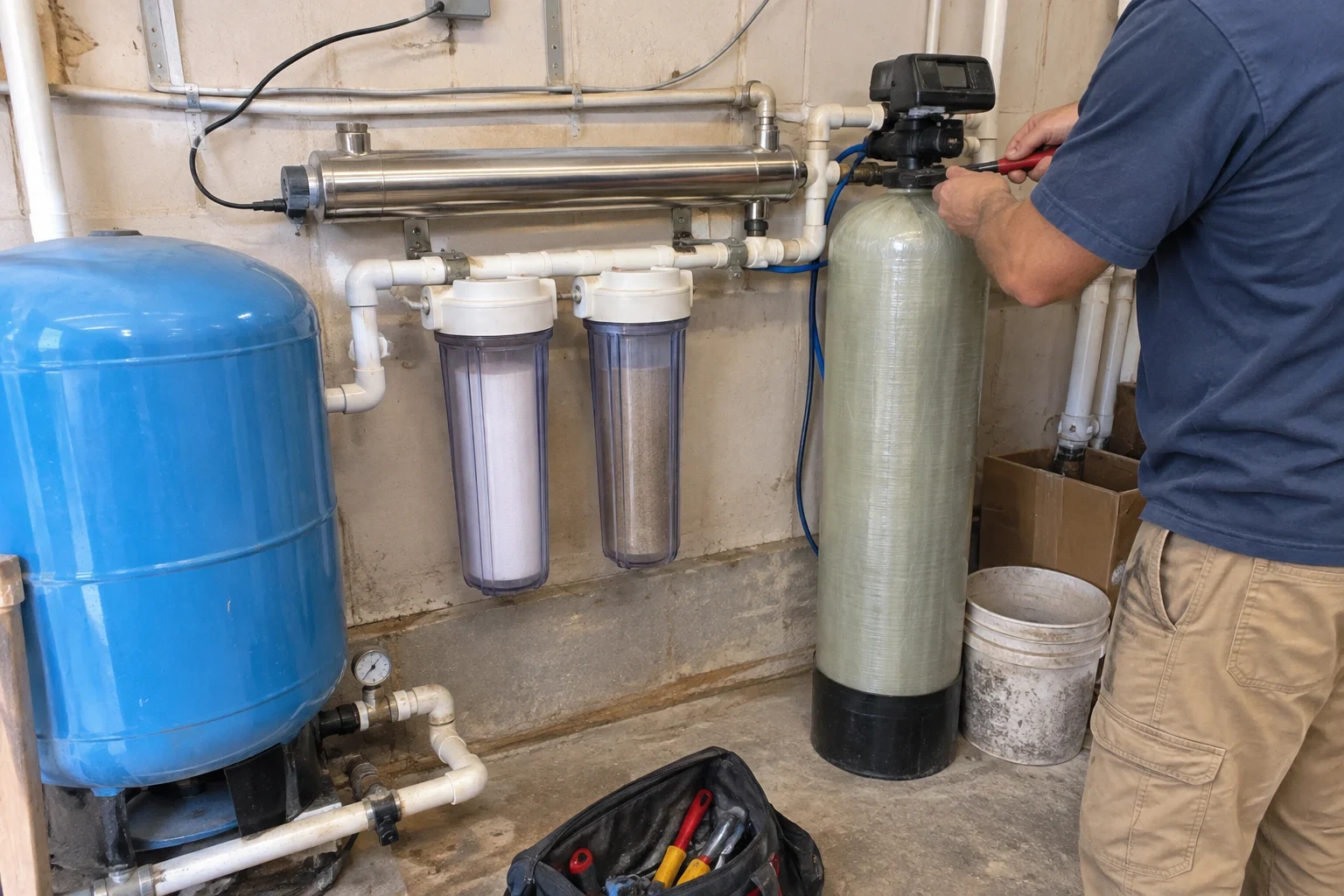
What a well filter system actually does
Well water picks up what the aquifer holds. Around here that often means calcium and magnesium dissolved from limestone, plus sediment, and in some wells iron or a rotten-egg sulfur smell. None of that is fixed by one cartridge. A working system is a sequence: sediment filtration to protect everything downstream, then whatever stages your test calls for, such as iron and sulfur removal, softening, carbon for taste, and UV disinfection when bacteria are a concern.
We install that sequence on the main line after your pressure tank, so every faucet, shower and appliance in your home gets treated water. The order matters. UV only works on clear water, and a softener resin bed fouls quickly if iron reaches it first.
There is a running-cost side too. Scale coats water heater elements and tank bottoms, and a scaled heater burns more energy to deliver the same hot water. Removing hardness and sediment at the well keeps that heater, your fixtures and your appliances closer to their rated efficiency.
What the work includes
Testing before any equipment
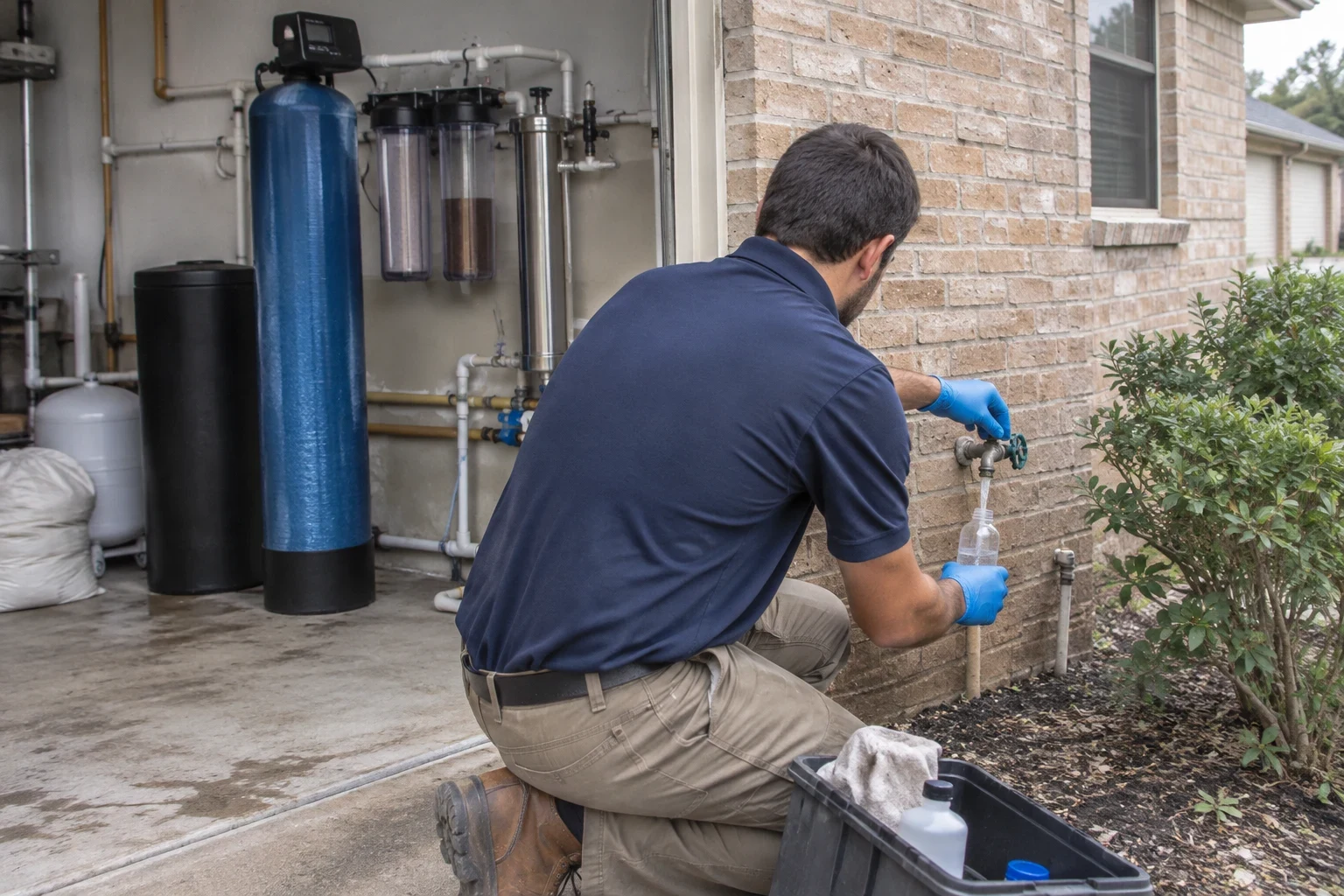
We start with a water test covering hardness, iron, manganese, pH, sulfur and sediment, and we add bacteria testing when it makes sense. Our Water Testing & Analysis page explains what each result means.
A flow-rate check on your well
Backwashing filters need a minimum flow, measured in gallons per minute, to lift and rinse the media. We measure what your pump and pressure tank actually deliver, so we never install a tank your well cannot backwash.
Staged filtration in the right order
Sediment first, then oxidizing media for iron and sulfur, then softening or conditioning, then carbon, with UV last. Each stage protects the one after it.
Bypass valve and solid plumbing
A bypass valve goes on every install, so the tanks can be isolated for maintenance while your taps still run. Tanks sit level and supported on proper fittings, and the backwash and regeneration discharge is routed to an approved drain point.
Startup, settings and a walkthrough
We program regeneration schedules, set backwash timing, and show you how to change cartridges and read the control head before we leave.
Signs your well water needs filtering
- Orange or brown stains
- Rust-colored rings in toilets and tubs point to dissolved iron that oxidizes once it hits air. Severe cases may need our Iron and Sulfur Removal setup as one stage.
- A rotten-egg smell
- Hydrogen sulfide gas is common in some wells and often stronger on the hot side. It also corrodes copper and brass fittings over time.
- White crust and a slow water heater
- Limescale on fixtures means it is also building up inside your heater. That layer insulates the water from the heat source, so recovery slows and energy use climbs.
- Grit in aerators and clogged filters
- Sand and silt from the well wear out valve seats, faucet cartridges and appliance inlet screens.
- No test in the last year
- Well water can change with drought, heavy rain or work on the well itself. If you have never tested, or a test is overdue, that is reason enough to check.
How a well filtration job runs
- 1
Test and review
We collect samples and go over the results with you line by line. If a stage is not needed, we say so and leave it out.
- 2
Design and written quote
We size each tank to your household's water use and your well's flow rate, then give you a quote by phone and in writing that lists every component.
- 3
Installation day
Most installs take a few hours. We shut off water at the pressure tank, cut in the system with a bypass, run the drain line, and protect the floor in your equipment area. Installation is free.
- 4
Startup and retest
We flush the media, set regeneration, and check pressure at a fixture. A follow-up test confirms the system is removing what it was built to remove.
What moves the price
The cost depends on what is in your water, not on a package. Two homes in Kyle and Dripping Springs can need completely different systems. Because we install at no charge, your quote is mostly equipment, and we explain why each piece is on it.
- Number of stages
- A sediment filter alone is simple. Adding iron removal, softening, carbon and UV each adds a tank or housing and its media.
- Concentration of contaminants
- Higher iron or hardness levels call for larger media beds or an air-injection oxidizer so the system keeps up between regenerations.
- Household water use
- More bathrooms and more people mean higher peak flow, which needs larger tanks to avoid a pressure drop at the shower.
- Space and existing plumbing
- A tight well house or corroded fittings at the pressure tank can add parts and time.
Well water filtration questions
- Do I need a softener if I am on a well?
- Only if your hardness result supports it. Many limestone wells test hard enough that a softener pays for itself in water heater efficiency and fewer fixture repairs. If you would rather avoid salt, our Salt-Free Water Conditioners page covers the trade-offs.
- Will a filter system lower my water pressure?
- A correctly sized one should not cause a noticeable drop. Pressure loss usually comes from undersized tanks or clogged cartridges, which is why we measure your flow before choosing equipment.
- Is UV necessary on a private well?
- UV is the stage that addresses bacteria, and it makes sense when a test shows coliform or when the wellhead is exposed to surface water. We cover it in detail on our UV Water Purification page.
- How much upkeep does the system need?
- Sediment cartridges usually need changing every few months, and UV lamps once a year. Backwashing tanks run on their own; you mainly keep salt in a softener and glance at the control head now and then.
- Does backwashing waste much water or power?
- Each backwash uses some water and runs your pump for a short cycle. We set the schedule by actual water use rather than a fixed calendar, so the system only cleans itself when it needs to.
Find out what is in your well
A free water test tells us which stages your home needs and which it does not. From there we can give you a clear quote and schedule a free installation.