ServicesWater Softener Installation
Water Softener Installation in Buda
We install ion-exchange water softeners sized to the hardness and water use of your home, so scale stops building up inside your water heater, fixtures and appliances. Every job starts with a hardness test and uses a metered control valve. Installation is free.
How Ion Exchange Works and Who Needs It
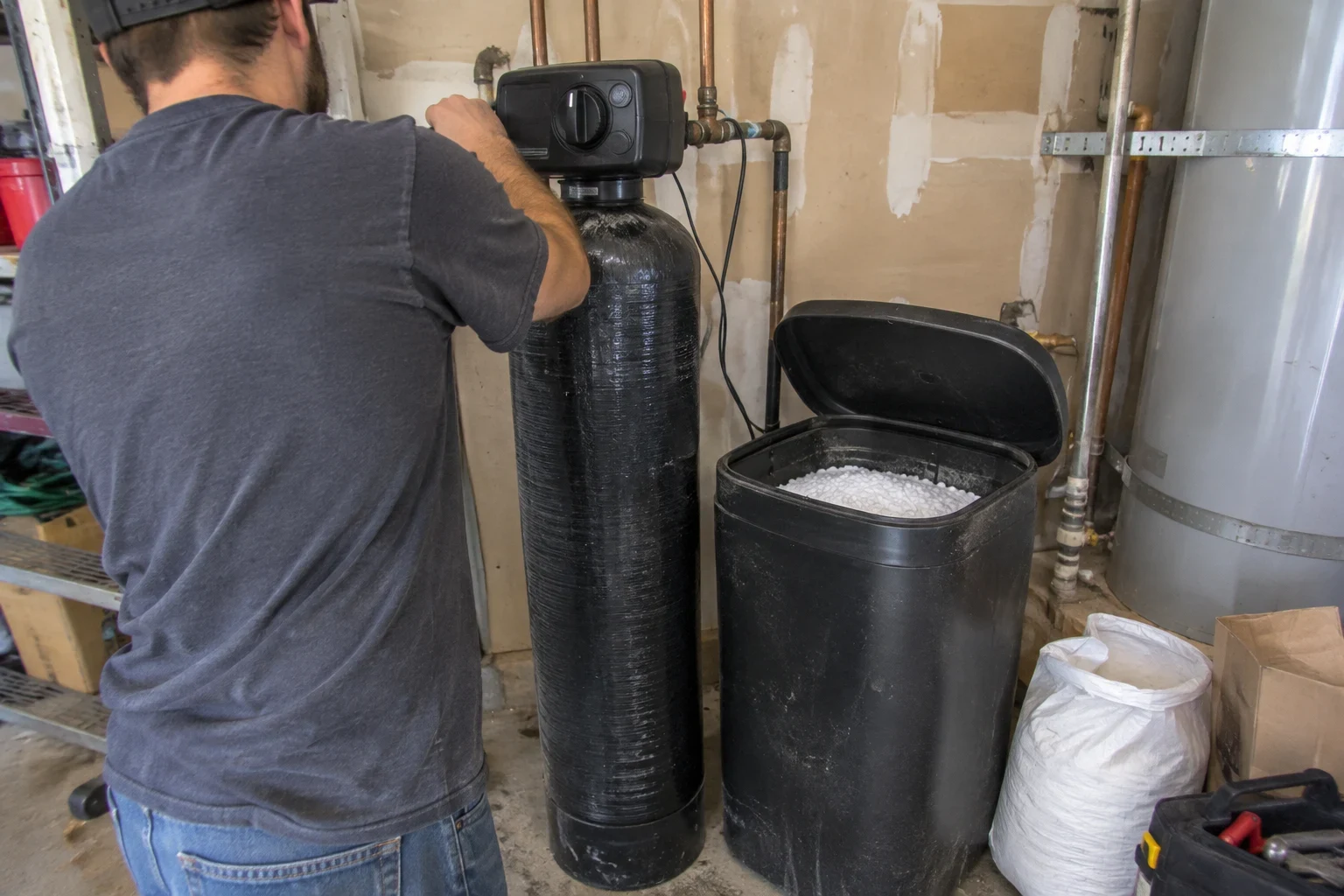
Inside the softener tank sits a bed of resin beads holding sodium ions. Hard water passes over them, and the calcium and magnesium in it latch onto the beads while sodium is released in their place. Once the resin is loaded with minerals, the control valve starts a regeneration. Salt brine from the second tank rinses the hardness off the beads and sends it to the drain, recharging the bed for the next run.
Limestone under much of Central Texas gives groundwater a heavy dose of calcium, and that matters for your utility bills. In a tank water heater, scale collects on the tank floor and crusts over electric elements, putting an insulating layer between the heat source and the water. Each gallon then takes more gas or electricity to warm. Tankless heaters suffer too: mineral deposits shrink the passages in the heat exchanger until the unit flags a descaling error.
Choose a softener when your test shows meaningful hardness and you want the minerals taken out of the water, not just kept from sticking. With moderate readings and no interest in hauling salt, our salt-free water conditioners page covers the alternative. Your results decide which one we recommend.
Parts and Work in Every Softener Install
Sizing from your numbers
We measure hardness at your home and ask how many people live there and how many bathrooms you have. From that we choose a grain capacity that lets the resin run several days between regenerations instead of cycling every night, which holds down salt and water use.
Demand-initiated control valve
Our valves meter the gallons flowing through and regenerate only when the resin is close to exhausted. A basic timer valve regenerates by the calendar, burning salt and water even during a week when nobody was home.
Bypass valve and line connections
We fit a bypass at the unit so water can be routed around the softener for service or a salt problem, and your taps and appliances still get water while it is out of the loop. If your home was built with a softener loop, we tie into it. If not, we cut into the main near its entry point and plumb in copper or PEX to match what is already there.
Air-gapped regeneration drain
Backwash water exits through a drain line that ends above an air gap, so dirty water has no path to siphon back into the system. We clamp the line in place so the force of a regeneration cannot whip it loose.
Startup and valve programming
We load salt into the brine tank, program your hardness and capacity into the valve, run a manual regeneration, and check the treated water with a test strip before we leave.
Clues Your Water Needs Softening
- Chalky rings on faucets
- When water evaporates from aerators, shower heads and glass shower doors, it leaves calcium carbonate behind as a hard white film.
- Rumbling or popping water heater
- Water caught beneath scale and sediment on the tank floor flashes to steam and makes that sound. The heater is burning extra energy to push heat through the buildup.
- Frequent tankless flush warnings
- Needing a vinegar flush on your tankless unit more than once a year means minerals are plating the heat exchanger faster than normal maintenance can clear.
- Weak lather and soap film
- Calcium and magnesium react with soap and leave residue on skin, tile and dishes. To compensate, you use more detergent and turn the water hotter.
- Spotted dishes and rough laundry
- Glasses that come out of the dishwasher spotted and towels that dry stiff are both signs of minerals left on surfaces and in fabric.
From First Call to Soft Water
- 1
Call and free water test
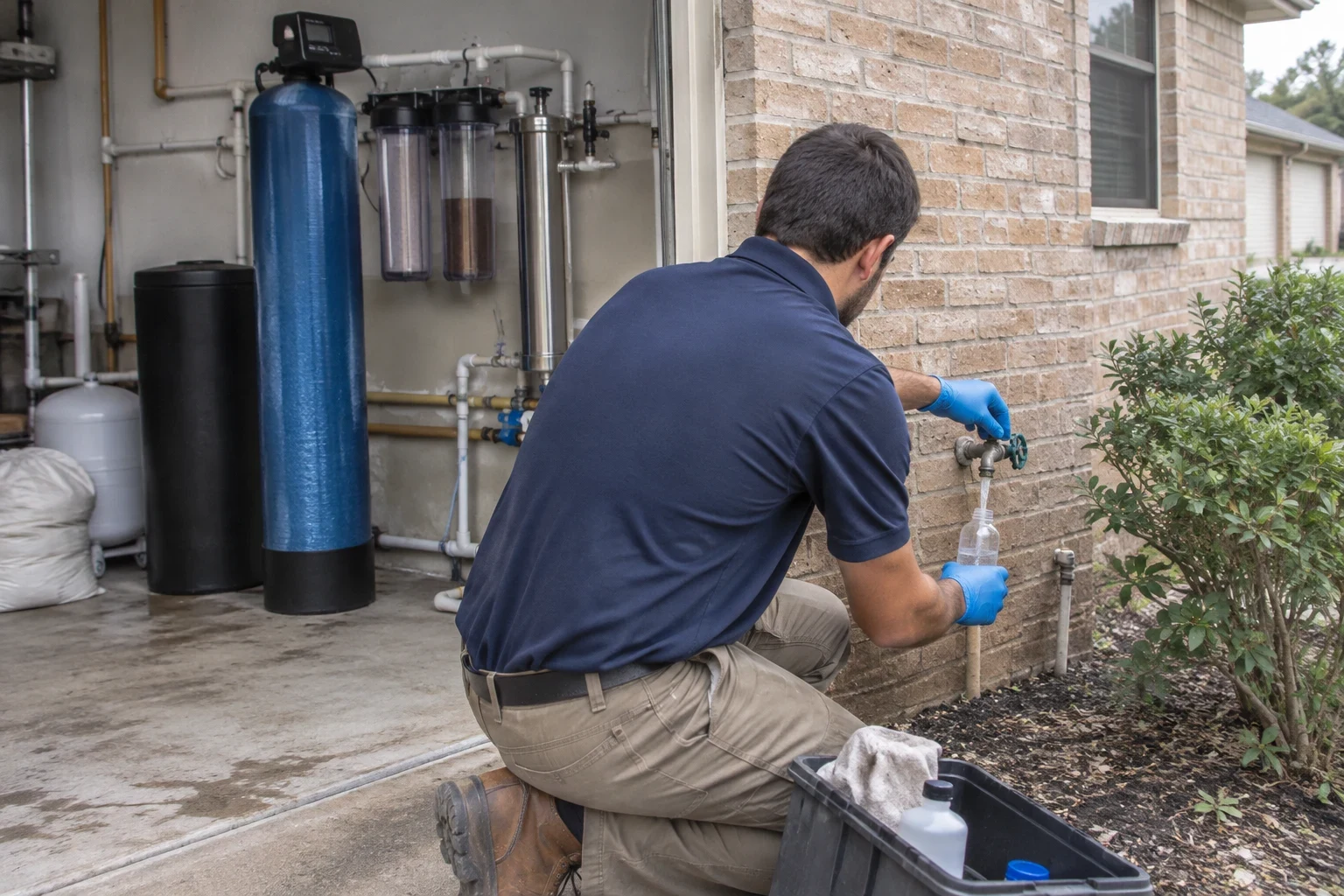
Once you call, we pick a time to come out and test the water at your home at no charge. You see the hardness reading yourself, so the recommendation has a number behind it.
- 2
Equipment choice and written quote
Your results and household size set the tank capacity and valve, and we check the spot where the unit will sit. The written quote spells out the equipment and any plumbing changes it needs.
- 3
Installation visit
We close the main shutoff, plumb the bypass and softener, route the drain and connect the valve to power. Your water is off for a portion of the appointment, not the whole thing, and we leave the install area tidy before we go.
- 4
Setup and how-to
We put the system through a regeneration, check for soft water at a tap, and show you how to refill salt, switch the bypass and read the valve screen.
What Moves the Price
Installation is free, so your quote covers the equipment and any plumbing work your home needs. The numbers come from your test and your house, not a one-size package. Here is what changes them.
- System capacity
- Harder water and a bigger household need more resin to avoid daily regenerations. A larger tank costs more up front but uses salt and water more efficiently.
- Valve type
- Metered valves with a digital display cost more than basic timer valves. They usually pay that back over time in less salt and less drain water.
- Plumbing at the install spot
- A home with a pre-plumbed softener loop and a nearby drain and outlet is straightforward. Running a new loop, a long drain line or a new outlet adds work.
- Carbon pre-filtration
- Chlorine in city water slowly breaks down resin beads. Adding a carbon stage ahead of the softener protects the resin and improves taste, and we price it as a separate line if you want it.
Water Softener Questions
- Will soft water lower my energy bill?
- It can help by keeping scale off your water heater's tank bottom, elements and heat exchanger, since scale slows heat transfer. How much depends on how hard your water is and how much hot water you use. We will not promise a specific savings number, but stopping new scale keeps the heater closer to its original efficiency.
- Should I get a softener or a salt-free conditioner?
- A softener removes calcium and magnesium through ion exchange. A salt-free conditioner changes how minerals behave so they are less likely to stick, but they stay in the water. If your test shows high hardness and you want spot-free results, a softener is usually the better match.
- How often will I add salt?
- It depends on hardness, household size and the valve settings. With a metered valve sized correctly, most families top off the brine tank every month or two. We set the valve so it uses only the salt it needs.
- Is softened water OK to drink?
- Softening adds a small amount of sodium in exchange for the hardness it removes. Many people drink it without concern. If you are watching sodium, an under-sink reverse osmosis system removes most of it at the kitchen tap.
- Why does soft water feel slippery?
- Without calcium and magnesium binding to it, soap rinses off more completely, so skin feels smoother. That feeling is normal. You can usually cut back on soap and detergent.
Find Out What Your Water Needs
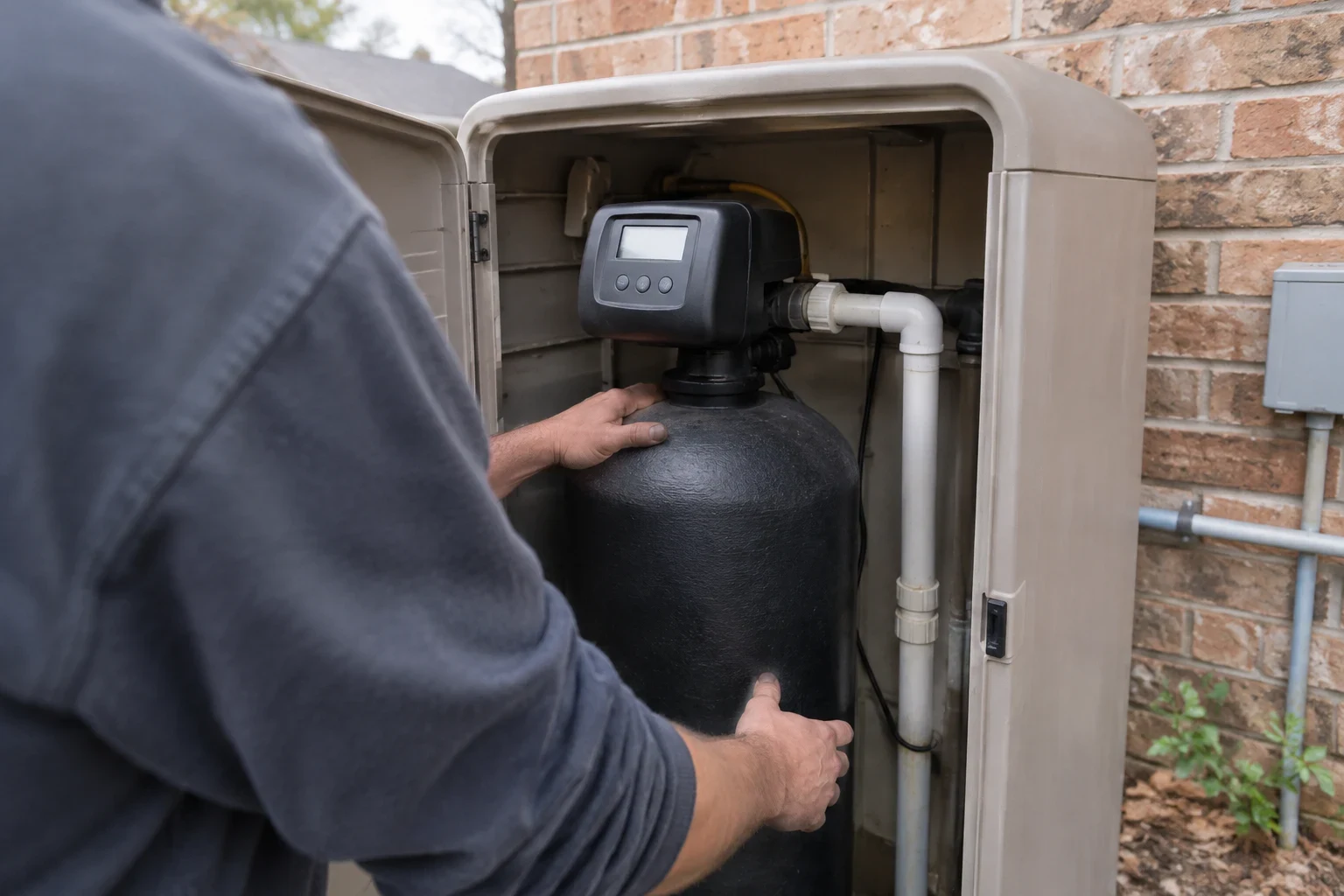
We will test your water at no charge and size a softener only if the results call for one. Installation is free, and you get your quote by phone.