ServicesReverse Osmosis Systems
Reverse Osmosis Systems in Buda
We install under-sink reverse osmosis for the water you drink and cook with. We test your tap water first, then size the prefilters and check your line pressure. You get clean water at the faucet, and less of it goes down the drain.
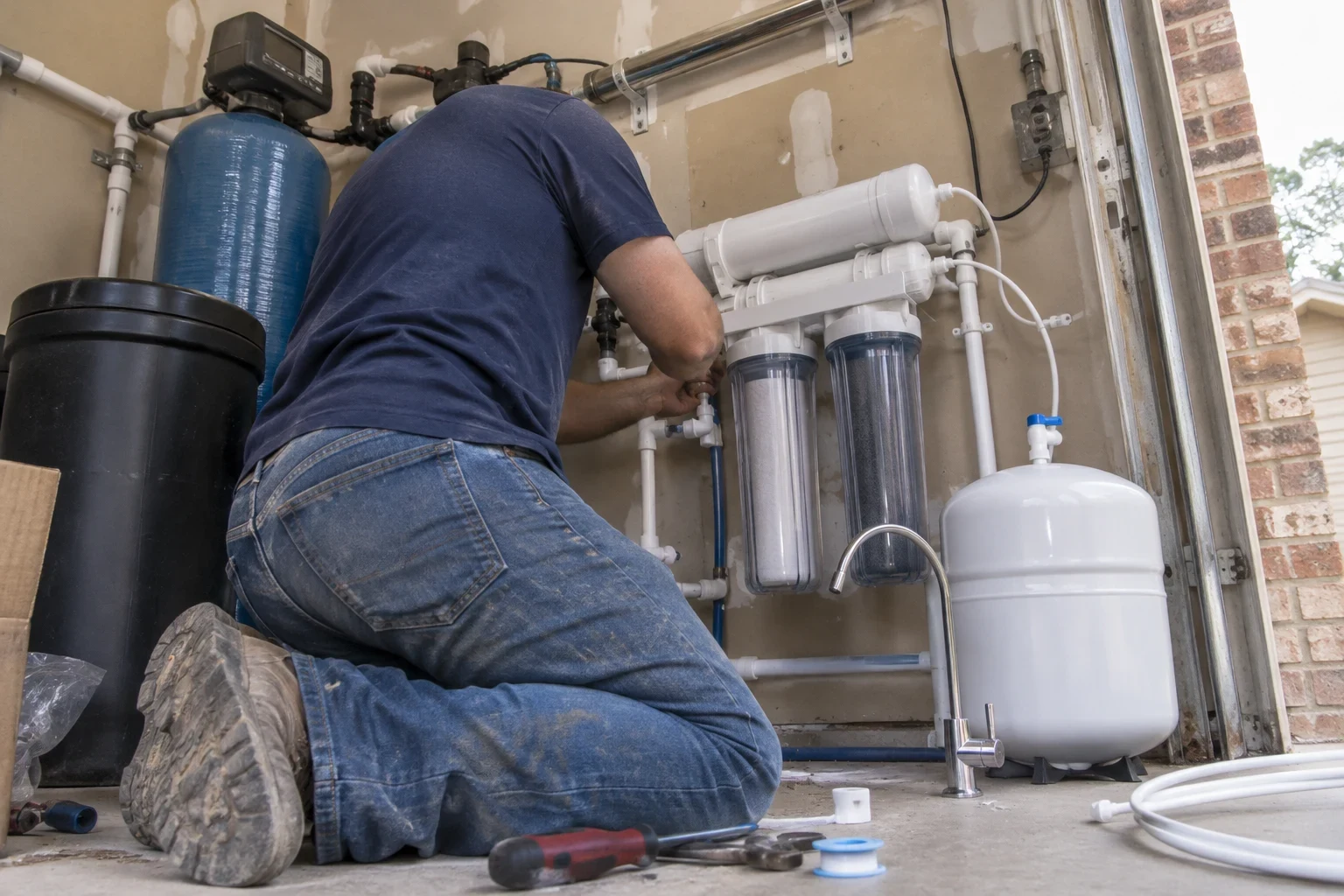
What Reverse Osmosis Does at Your Kitchen Sink
Reverse osmosis forces water across a semipermeable membrane, a layered polyamide sheet so fine that dissolved salts, nitrates, fluoride and lead from older solder or fixtures get left behind. The clean water that makes it through is called permeate. The rejected water, called concentrate, carries those dissolved solids to the drain. That steady rinse is what keeps the membrane surface from clogging, and it is also the running cost most people never hear about.
A poorly set up system can send several gallons to the drain for every gallon you keep, especially when line pressure is low. We look at that ratio before we recommend anything. Correct feed pressure, a matched flow restrictor and, where it fits, a non-electric permeate pump make a real difference to your water bill. Central Texas water tends to run hard, and hardness scales a membrane faster, so we check that too.
What Goes Into an RO Installation
Sediment prefilter
The first housing holds a 5-micron sediment cartridge. It catches grit, loose scale and flakes of pipe corrosion before they reach the carbon and the membrane.
Carbon block stage
Chlorine and chloramine slowly attack the polyamide layer of an RO membrane. A carbon block placed ahead of the membrane pulls them out, which extends membrane life and removes the pool taste.
Membrane and flow restrictor
We pick a membrane whose rated output fits how much water your home uses for drinking and cooking. The restrictor on the drain line is sized to that membrane, which holds the waste ratio in its proper range.
Storage tank and shutoff
A pressurized bladder tank stores treated water so the faucet delivers a usable flow. Once the tank reaches capacity, an automatic shutoff valve halts production, which keeps concentrate from trickling to the drain through the night.
Faucet, air gap and drain saddle
We mount a dedicated faucet at the sink and connect the drain line to your sink drain above the trap. Where local plumbing practice calls for it, we fit an air-gap faucet so drain water cannot siphon back.
Free installation
Installation is free. Your quote lists the equipment and any extras your home needs, such as a booster pump or remineralization cartridge, item by item.
Signs an RO System Makes Sense for You
You buy bottled water every week
Cases and delivery jugs add up, and so does hauling them. A home RO system makes that water at the sink for the cost of filters and a little drain water.
Coffee and ice taste off
Chlorine and dissolved minerals change the taste of coffee, tea and ice. RO plus a carbon polishing filter takes both down.
White spots on kettles and glassware
Calcium and magnesium leave scale wherever water evaporates. RO removes most of the dissolved solids from your drinking water, so the kettle stays clean.
Older plumbing or fixtures
Homes with older brass fixtures or soldered copper can pick up lead at the tap. A water test tells you whether that is happening, and an RO membrane rated for lead reduction is one of the most effective ways to bring it down.
Your current RO runs constantly
If you hear water draining under the sink long after the tank should be full, the shutoff valve or check valve has likely failed. The system keeps dumping water to the drain all day and night, and your water bill shows it.
How the Job Runs
- 1
Test the water first
We test your tap water for hardness, total dissolved solids and chlorine. If hardness is high, we may suggest a softener or conditioner upstream so the membrane lasts longer.
- 2
Measure pressure and space
RO membranes work best with steady feed pressure. We measure it at the sink and check cabinet room for the tank and filter housings, so we know before install day whether a booster or permeate pump belongs in the plan.
- 3
Install and leak-check
We tap the cold line with a feed valve, mount the housings and tank, and drill the countertop or use the existing sprayer hole for the faucet. Every push-fit and threaded connection is checked under pressure.
- 4
Flush and walk through
New carbon releases fine dust and the membrane has preservative in it, so we flush the first tanks to drain. Then we show you how to change cartridges and how to tell when the membrane is due.
What Moves the Price of an RO System
Installation is free, so your price comes down to the equipment your water and your plumbing call for. We explain each item on the quote and why it is there. If a simpler setup will do the job, we say so.
- Number of stages
- Our 5-stage tank reverse osmosis system (sediment, GAC, carbon block, RO membrane and post carbon, with an under-sink storage tank) is the least expensive setup, and our tankless reverse osmosis system (800 gallons per day, 7 stages) is the step up. Adding a remineralization cartridge or a second carbon stage raises the equipment cost, and we only suggest those when your test results give a reason.
- Pressure and waste control
- Low line pressure may call for an electric booster pump. A non-electric permeate pump costs more up front but cuts the water sent to drain, which lowers what you pay to run the system.
- Water hardness
- Hard water fouls a membrane faster. Treating hardness upstream adds cost now but spaces out membrane replacements.
- Faucet and countertop
- Drilling stone or quartz takes more time and the right bit. Using the existing sprayer or soap dispenser hole keeps it simple.
Reverse Osmosis Questions
Something not covered here? (512) 975-3164
How much water does an RO system waste?
It depends on feed pressure, membrane design and the restrictor on the drain line. Low pressure makes the ratio worse. We measure pressure before we recommend a system, and a permeate pump can reduce drain water considerably.
Does RO remove the minerals I want?
Yes, it removes most calcium and magnesium along with everything else dissolved. Your diet supplies far more of those minerals than a glass of water does. Some people simply like the flavor better with a little mineral content, and for them we add a remineralization cartridge after the membrane.
How often do filters need changing?
Sediment and carbon prefilters usually need changing about once a year, sooner with heavy use or dirty water. The membrane lasts longer when the prefilters are kept up and hardness is controlled. A drop in flow or a change in taste is the usual cue.
Can RO feed my refrigerator ice maker?
Usually, yes. We run a line from the tank to the fridge. If the run is long or the fridge needs more pressure, a permeate pump or booster helps keep the flow steady.
Will it slow down my kitchen faucet?
No. RO only feeds its own faucet, and your main kitchen faucet stays on regular cold and hot water. Water for dishes and handwashing never passes through the membrane.
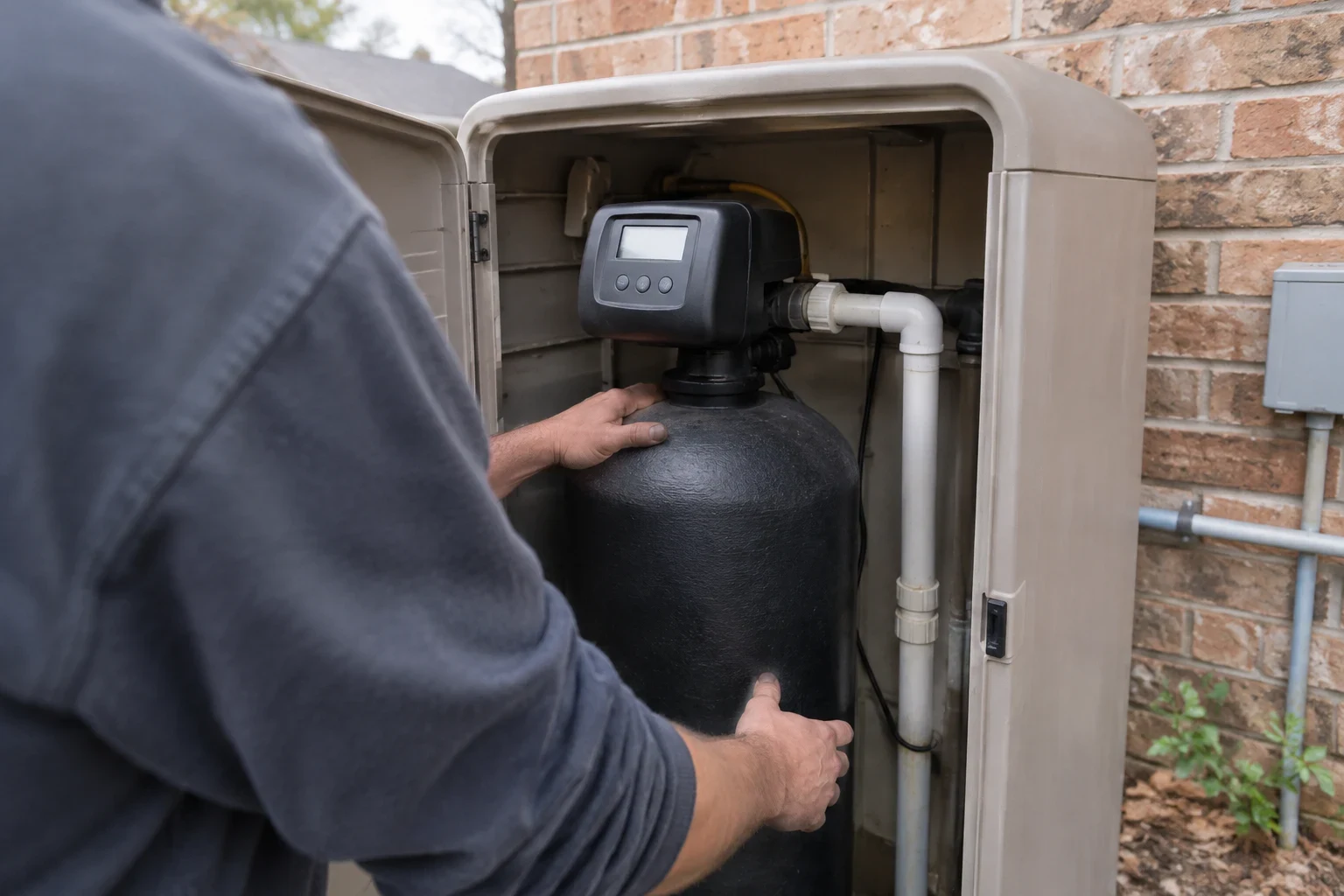
Find Out What Your Tap Water Needs
We will test your water at no charge and tell you whether RO is the right fit or whether a carbon filter alone would do. If RO makes sense, you get a quote with every part listed.