ServicesSalt-Free Water Conditioners
Salt-Free Water Conditioners in Buda
A salt-free conditioner changes how calcium and magnesium behave in your water, so they stop bonding to heating elements, tankless heat exchangers and fixtures. There are no salt bags, no brine discharge and no electrical hookup. We test your water first and tell you plainly whether conditioning fits your home.
How a Salt-Free Conditioner Works
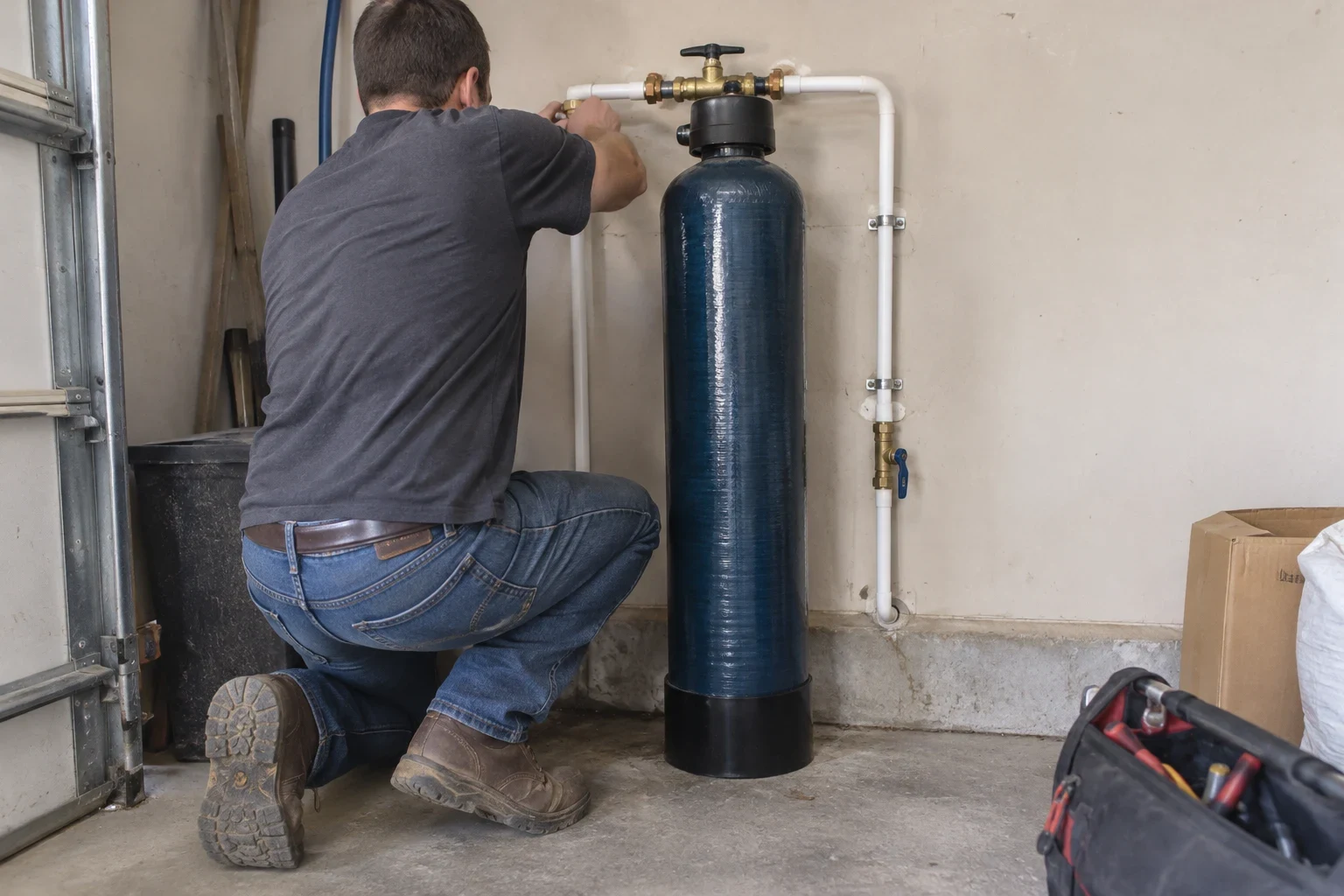
Most of the units we install use template-assisted crystallization, or TAC. Water passes through a bed of polymer beads with nucleation sites on their surface. Dissolved calcium and magnesium gather on those sites and form microscopic crystals that let go and travel with the water. Because the minerals are already in crystal form, they have little reason to plate out as hard scale when the water is heated.
This is different from a softener. A conditioner does not remove hardness, so the water keeps its minerals and its normal feel. It also never regenerates, which means no backwash cycle, no drain line, no wasted water and no power draw. Central Texas water picks up minerals from limestone, and conditioning is a low-upkeep way to protect the equipment that heats it.
The running-cost side is real but specific. Scale on the bottom of a tank water heater or inside a tankless heat exchanger acts like insulation, so the burner or element runs longer to reach the same temperature. Slowing new scale helps your heater keep its efficiency and spend less time on descaling. If your water tests very hard or carries iron, we will say so and point you to Water Softener Installation or Iron and Sulfur Removal instead.
What Your Installation Includes
- 01
Water test before anything else
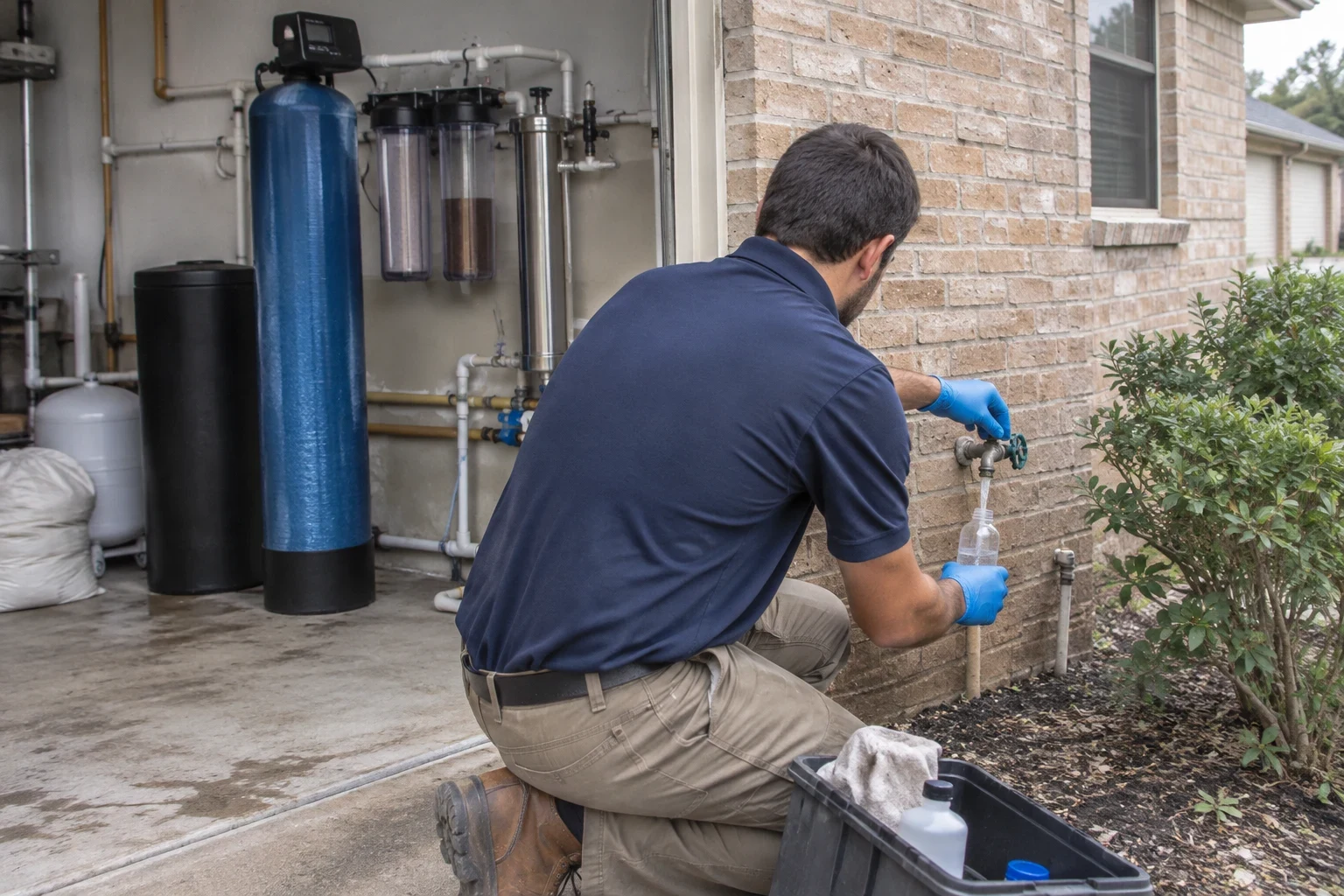
We check hardness, iron, manganese, chlorine and pH. TAC media works within limits, and iron or high hardness can coat the beads and shorten their life.
- 02
Conditioning tank sized to your flow
We size the tank by the peak gallons per minute your plumbing can draw, since floor area alone says little about demand. When several showers and a washer can run together, the water needs more media to pass through than it does in a smaller house with fewer fixtures.
- 03
Sediment and carbon prefiltration
A sediment cartridge keeps grit off the media. Where chlorine levels call for it, we add a carbon stage, because chlorine can degrade some conditioning media over time.
- 04
Bypass valve and clean plumbing
We plumb in a three-valve bypass so you can isolate the system without shutting off water to your home. Connections match your existing PEX, copper or CPVC.
- 05
Free installation
We offer free installation on the systems we supply, including startup, a full flush and a leak check before we leave.
Questions about Salt-Free Water Conditioners?
Call(512) 975-3164Signs a Conditioner Makes Sense for Your Home
White crust on showerheads and aerators
Chalky buildup on faucet screens and shower nozzles is calcium carbonate. It narrows the openings and drops your flow.
A rumbling or popping water heater
Scale and sediment on the tank floor trap water beneath them. When that water flashes to steam, you hear it, and the heater is burning extra fuel to push heat through the layer.
Tankless unit needing frequent descaling
Narrow heat exchanger passages scale fast. Error codes, fluctuating temperature or a shortening descale schedule all point to hardness.
You want scale control without salt
Some homeowners do not want to haul salt, give up garage space for a brine tank or send regeneration water down the drain. A conditioner avoids all three.
What Happens From Call to Startup
- 1
Phone call and free water test
You tell us what you are seeing, and we set up a free water test at your home. Results guide the recommendation, not the other way around.
- 2
Straight recommendation and quote
We explain whether a conditioner, a softener or a filter fits your numbers, and why. Your quote lists the tank, prefilters and any plumbing changes.
- 3
Installation on the main line
We shut off the water, cut into the main line where it enters your home or near the water heater, and install the prefilter, conditioning tank and bypass. Most installs take a few hours, and we clean up the work area.
- 4
Flush, check and walkthrough
We flush the media, check every joint under pressure and show you how the bypass works. You will know which cartridge to change and roughly when.
What Moves the Price
Installation is free, so your cost centers on the equipment your water actually needs. We will not know that until we test, which is why the test comes first. Your quote by phone is written out by component.
- Tank size and flow rate
- Larger homes with more simultaneous fixtures need a bigger media tank to keep contact time adequate at peak use.
- Prefiltration needs
- A basic sediment stage costs less than a sediment-plus-carbon setup. Chlorine levels and visible grit decide which you need.
- Water chemistry
- If the test shows iron or manganese, that has to be treated upstream first, which adds equipment.
- Plumbing access
- An open loop in the garage is simple. A main line buried in a wall or a cramped utility closet takes more fittings and time.
Salt-Free Conditioner Questions
Will my water feel soft?
No. The minerals stay in the water, so it feels like it does now. Soap lathers about the same. If the slippery softened feel matters to you, a salt-based softener is the better choice, and we will tell you that.
Will I still get water spots?
Yes, where water evaporates on glass or tile you will still see some residue, because the minerals are still present. The difference is that the residue tends to wipe away more easily instead of hardening into crust.
Does it actually help my water heater's efficiency?
It helps by slowing new scale on heating surfaces, and scale is what makes a heater run longer per gallon. It will not remove heavy scale already in an old tank, so we may suggest flushing the heater around the time of install.
What maintenance is involved?
You change the prefilter cartridge on a schedule set by your water use and sediment level. The TAC media itself is replaced after several years. There is no salt to add and nothing to program.
Can I pair it with drinking water filtration?
Yes. Many homes add an under-sink unit from our Reverse Osmosis Systems page for drinking and cooking water, or a carbon stage from Whole-Home Filtration for chlorine taste throughout the house.
Find Out If Your Water Is a Good Match
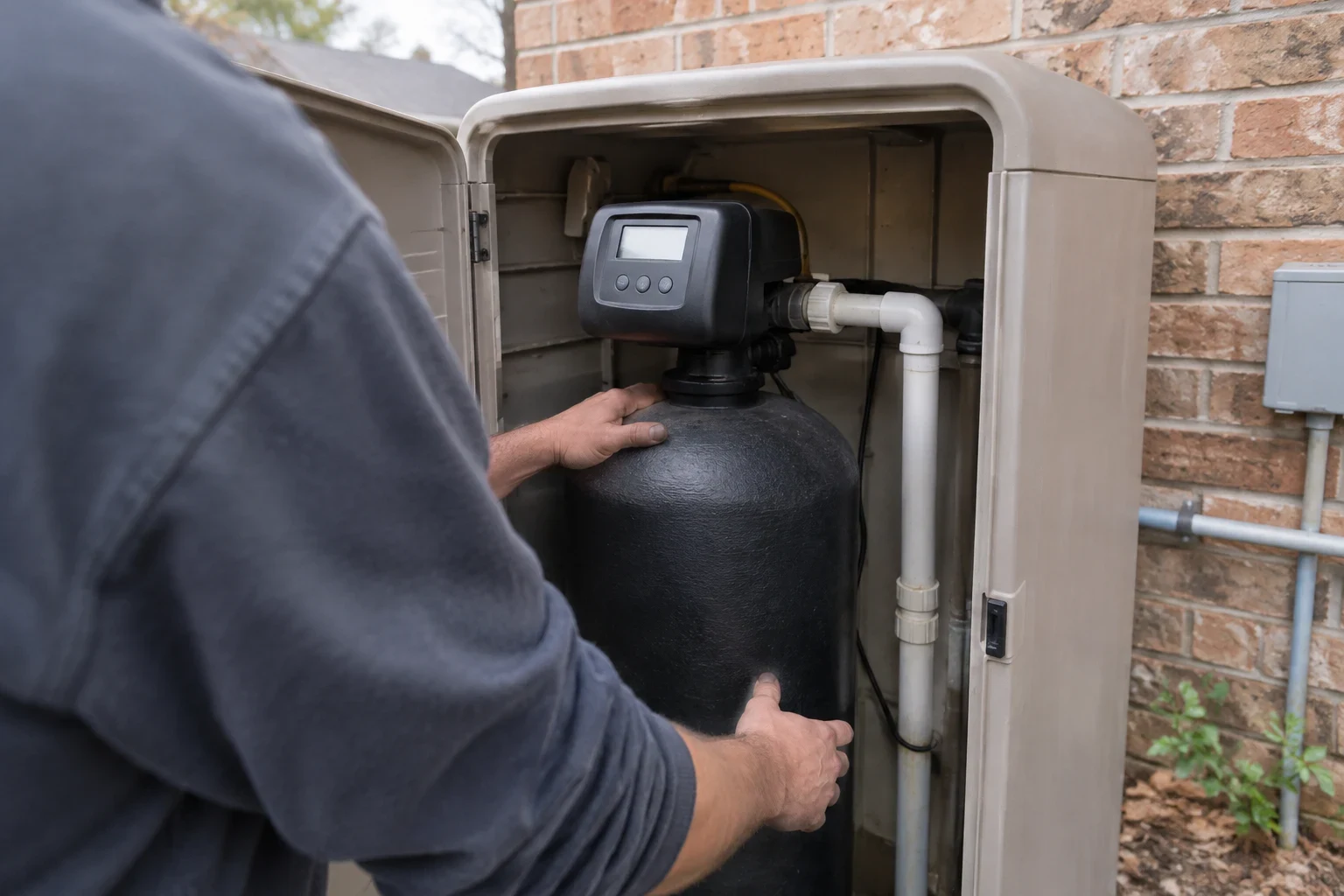
A test tells us whether a conditioner will do the job or whether something else fits better. We serve Buda, Kyle, San Marcos and the surrounding area.