ServicesIron and Sulfur Removal
Iron and Sulfur Removal in Buda
Orange rings in the toilet, gray film on fixtures, or a rotten-egg smell when the tap runs. We find out which form of iron or sulfur is causing it, then install a filter that oxidizes and traps it before it reaches your fixtures and water heater.
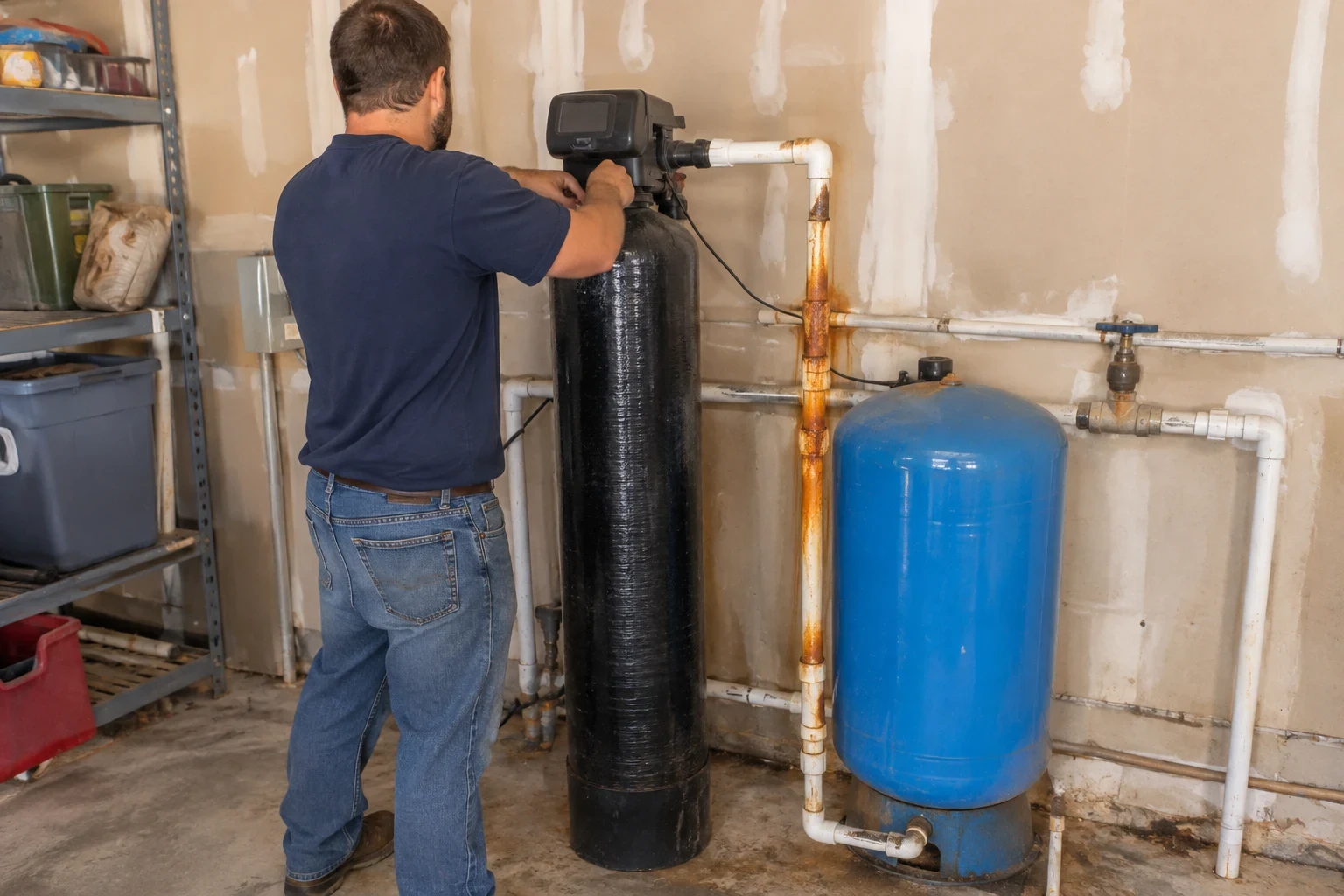
What iron and sulfur removal actually does
Iron usually arrives dissolved, as clear ferrous iron. It only turns into the rusty ferric particles you see once it meets air or chlorine, which is why water can look clean in the glass and still stain a sink overnight. Hydrogen sulfide is a dissolved gas that gives off that rotten-egg smell, and it often travels with iron. Both are removed the same basic way: oxidize them into a solid, then catch the solid in a filter bed that rinses itself clean.
Removing them also helps with running costs. Iron settles as sludge in the bottom of a tank water heater and coats heating elements, so the heater runs longer to deliver the same hot water. Sulfur corrodes copper and brass fittings and blackens silver. Taking both out at the point of entry protects every appliance downstream, including a softener or reverse osmosis unit you may already own.
For homes on private wells in the hill country around Buda, iron and sulfur levels can vary a great deal from one well to the next. That is why we test before we recommend any equipment.
What the work includes
Iron, sulfur and pH testing
We measure ferrous and ferric iron, manganese, hydrogen sulfide and pH at your tap. pH matters because most oxidizing media need water above about 7 to work, and low-pH water needs correction first.
Hot-side versus cold-side check
If the smell is only on the hot side, the cause is often the magnesium anode rod in your water heater reacting with sulfate, not your source water. Sometimes the honest fix is an anode swap rather than a filter, and we will tell you that.
Air-injection oxidizing filter
For most homes we use an air-injection system. It holds a pocket of air at the top of the tank, which oxidizes iron and sulfur as water passes through, and needs no chemical feed. The control valve backwashes the media on a schedule and draws in fresh air.
Media matched to your water
Depending on your test results, the tank holds manganese dioxide media, catalytic carbon for heavier sulfide, or greensand-type media. Each has its own pH range, iron limit and backwash flow rate, so the choice follows your numbers rather than a catalog.
Installation and drain line
We plumb the unit in at the main line with bypass valves and run the backwash drain to an approved discharge point. Installation is free, so your quote covers the equipment.
Signs iron or sulfur is reaching your taps
Reddish-brown marks on porcelain and fabric
Iron shows up as rust-toned buildup under the toilet rim, around tub drains and on white loads of laundry. Chlorine bleach deepens it, because chlorine oxidizes the dissolved iron and locks the color into the glaze or fabric.
Rotten-egg odor
Hydrogen sulfide can be smelled at concentrations well below one part per million. When the odor comes from both the hot and cold taps, it is in the water supply itself and not coming from the water heater.
Black grit or slimy film
Fine black particles in faucet aerators or the toilet tank usually point to manganese. A slick orange or reddish coating inside the tank is more often iron bacteria, which needs its own treatment step.
Dull fixtures and darkened silverware
Sulfur reacts with copper, brass and silver. Faucet finishes go flat and silverware turns dark within a few weeks.
Sediment in the water heater
Rusty water during a heater flush, or a tank that rumbles and recovers slowly, usually means iron sediment is sitting on the burner plate or elements and making the heater work harder.
How the job runs
- 1
Free water test
We test at your kitchen tap and at the point where water enters your home, on both hot and cold. You see the readings as we take them.
- 2
Written recommendation
We explain what we found, which system fits and why, and give you a line-item quote. If an anode rod swap or a simpler fix solves the problem, we tell you so.
- 3
Installation day
We shut off the water, cut in the filter with a bypass loop, and run the drain line. Most homes are without water for a few hours, and we protect floors and clean up when we finish.
- 4
Startup and retest
We set the backwash schedule to your iron level and household use, flush the lines, and retest so you can see the difference. We also show you the bypass valves and what a normal backwash cycle sounds like.
What moves the price
Iron and sulfur systems are priced on the water they have to treat, not on a flat package. Two homes on the same street can need very different setups. Installation itself is free, and you get your quote by phone or after the test.
- Iron and sulfide concentration
- Low levels can be handled by an air-injection filter alone. Very high iron or heavy sulfide may need a chlorine or hydrogen peroxide feed with a contact tank, which adds equipment.
- pH correction
- Acidic water may need a calcite neutralizer ahead of the iron filter so the media can oxidize properly.
- Flow rate and home size
- The tank has to be large enough to backwash at the rate the media requires. More bathrooms and higher peak flow mean a bigger tank.
- Iron bacteria
- Bacterial iron fouls media quickly, so it usually needs a disinfection step and periodic sanitizing, which affects both upfront and running costs.
Iron and sulfur questions
Something not covered here? (512) 975-3164
Will a water softener take out iron?
A softener can remove small amounts of dissolved ferrous iron, but iron fouls the resin over time and reduces its capacity. It does nothing for hydrogen sulfide. When iron is more than a trace, a dedicated oxidizing filter ahead of the softener protects the resin and lasts longer.
Why does only my hot water smell?
That usually means the magnesium anode rod in your water heater is reacting with sulfate and bacteria to make hydrogen sulfide inside the tank. Replacing it with an aluminum-zinc anode often fixes it. We check this before recommending a whole-house filter.
How much maintenance does the system need?
Air-injection filters backwash themselves on a timer and use no chemicals. The media typically lasts several years before it needs replacing. Systems with a chlorine or peroxide feed need the solution tank refilled periodically.
Does backwashing waste a lot of water?
Each backwash uses a set volume of water, usually run overnight a few times a week. We set the frequency from your iron level so the system does not backwash more often than it needs to.
Can iron and sulfur damage my appliances?
Yes. Iron sediment settles in water heaters and builds up in dishwasher and washing machine valves, and sulfur corrodes copper and brass. Removing both at the main line keeps that wear down and helps your water heater keep its efficiency.
Find out what is in your water
We will test for iron, sulfur and pH at your home at no cost and explain what the numbers mean. If a filter makes sense, installation is free.