Water Filtration in Buda That Keeps Scale Out of Your Water Heater
We start with readings from an untreated tap, then recommend only the equipment those numbers support: whole-home filtration, a softener or salt-free conditioner, or reverse osmosis for drinking water. With less scale, water heaters and fixtures don't have to work as hard. Homes in Kyle and San Marcos are on our route too.
Filtration and Treatment for Your Home
Most homes need one or two pieces of equipment, not five. We install whole-home filtration, water softeners, salt-free water conditioners and reverse osmosis systems, plus iron and sulfur removal and UV water purification where a test points to them. Water testing and analysis comes first on every job, so the system matches what is actually in your water.
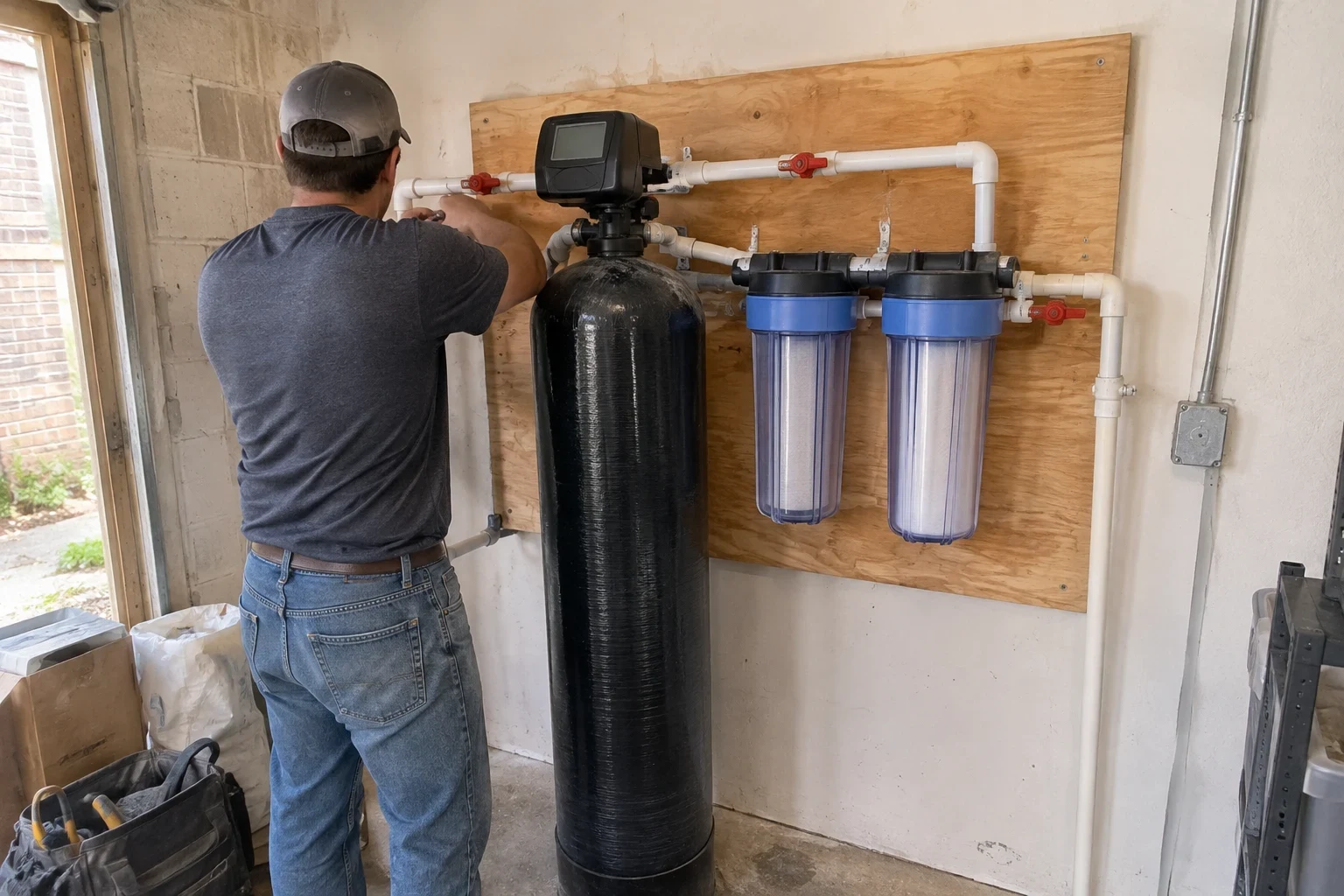
Whole-Home Filtration
A point-of-entry carbon system on your main line that removes chlorine taste, odor and sediment from every faucet, shower and appliance in your home.
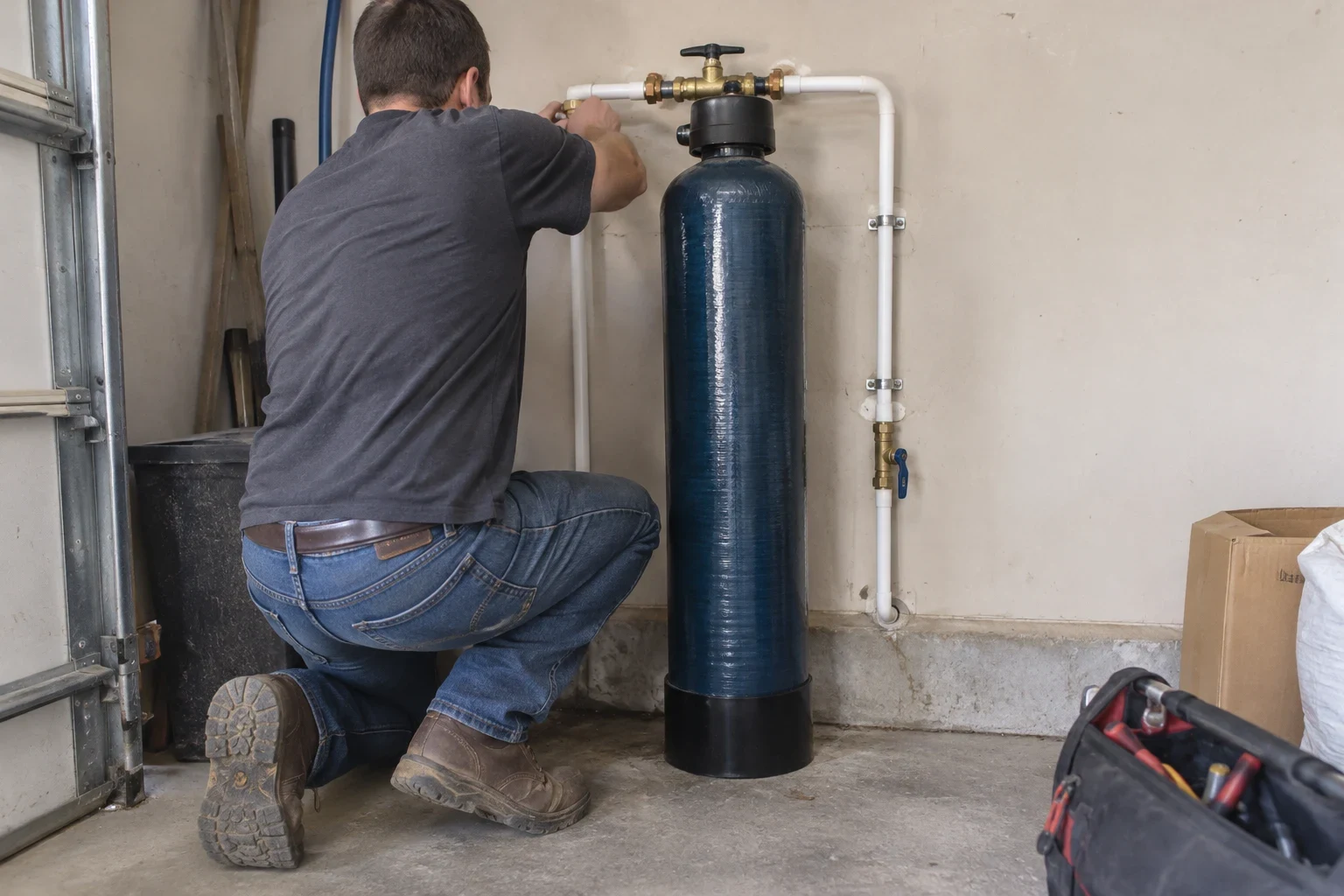
Salt-Free Water Conditioners
Conditioning media that keeps hardness minerals from bonding to heaters, pipes and fixtures, with no salt, no regeneration and no wastewater.
Water Testing & Analysis
A free in-home test of hardness, chlorine, iron, pH and dissolved solids, with plain readings and an honest answer on whether you need any equipment.
Water Softener Installation
Ion-exchange softeners sized from a hardness test, fitted with a metered valve and an air-gapped drain, to stop scale in your heater and fixtures.
Reverse Osmosis Systems
An under-sink RO system for drinking and cooking water, with the prefilters, pressure and drain setup matched to what your tap water actually carries.
Well Water Filtration
Filter systems for private wells, built from a test of your water and sized so your pump, pressure tank and water heater are not working harder than they need to.
Iron and Sulfur Removal
Oxidizing filters and catalytic carbon that take out orange staining and rotten-egg odor, sized from a test of your own water.
UV Water Purification
A UV chamber on your main line inactivates bacteria, viruses and cysts using about as much power as a light bulb, with no chemicals and no wasted water.
How We Work in Your Home
An undersized filter clogs early, and an oversized one means paying for capacity you never use. We match every system to your plumbing and your test results, then lay out what it will take to keep it running.
- Readings before recommendations
- We check hardness, iron, chlorine, pH and total dissolved solids at your tap and show you each number. If your hardness is low, we will tell you a softener is not worth buying.
- Sized to your flow rate
- Media tanks and cartridges are rated in gallons per minute. We count bathrooms and fixtures so two showers and a dishwasher running together don't drag your pressure down.
- Upkeep costs on the table
- Every system costs something to run: salt and regeneration water for a softener, cartridges for carbon, a yearly lamp for UV, reject water for reverse osmosis. You hear those figures before you decide.
- A bypass valve on every install
- Each system goes in with a three-valve or single-handle bypass, so we can take the equipment offline for a filter change and your faucets still run. Softeners drain through a line with a proper air gap, and we pressurize the system and check every joint for drips before we leave.
What Moves the Price of a Water System
Neighbors with identical floor plans can still end up with different equipment. Your price follows the water test results and the way your plumbing runs. These are the parts that shift it.
We put together your quote after the free water test, listing each part, its media and its expected upkeep. Installation is free.
- What the test finds
- A chlorine taste on its own is handled with carbon. Hardness, iron or a sulfur smell each call for an added stage with its own media, and every stage adds to the total.
- Type of media and equipment
- Catalytic carbon, ion-exchange resin, template-assisted crystallization media and RO membranes carry different prices and reach the end of their life on different schedules.
- Home size and fixture count
- Each added bathroom raises peak flow. Higher peak flow needs a larger tank or bigger cartridge housings so your pressure holds steady.
- Where the system goes
- Plenty of newer homes were built with a softener loop already stubbed out, often near the water heater or garage wall, and that shortens the work. Without one, we reroute the main line to a sensible spot, which adds plumbing time and fittings.
- Drain and power needs
- Softeners and some iron filters must sit near a drain and an outlet, and UV units also need power. Salt-free conditioners and plain carbon filters need neither.
From First Call to Clean Water
Most installs are finished in a single visit. Here is how it runs.
- 1
Tell us what you notice
On the phone, describe the taste, odor, spots or scale you are seeing. We set a time for the water test at your home.
- 2
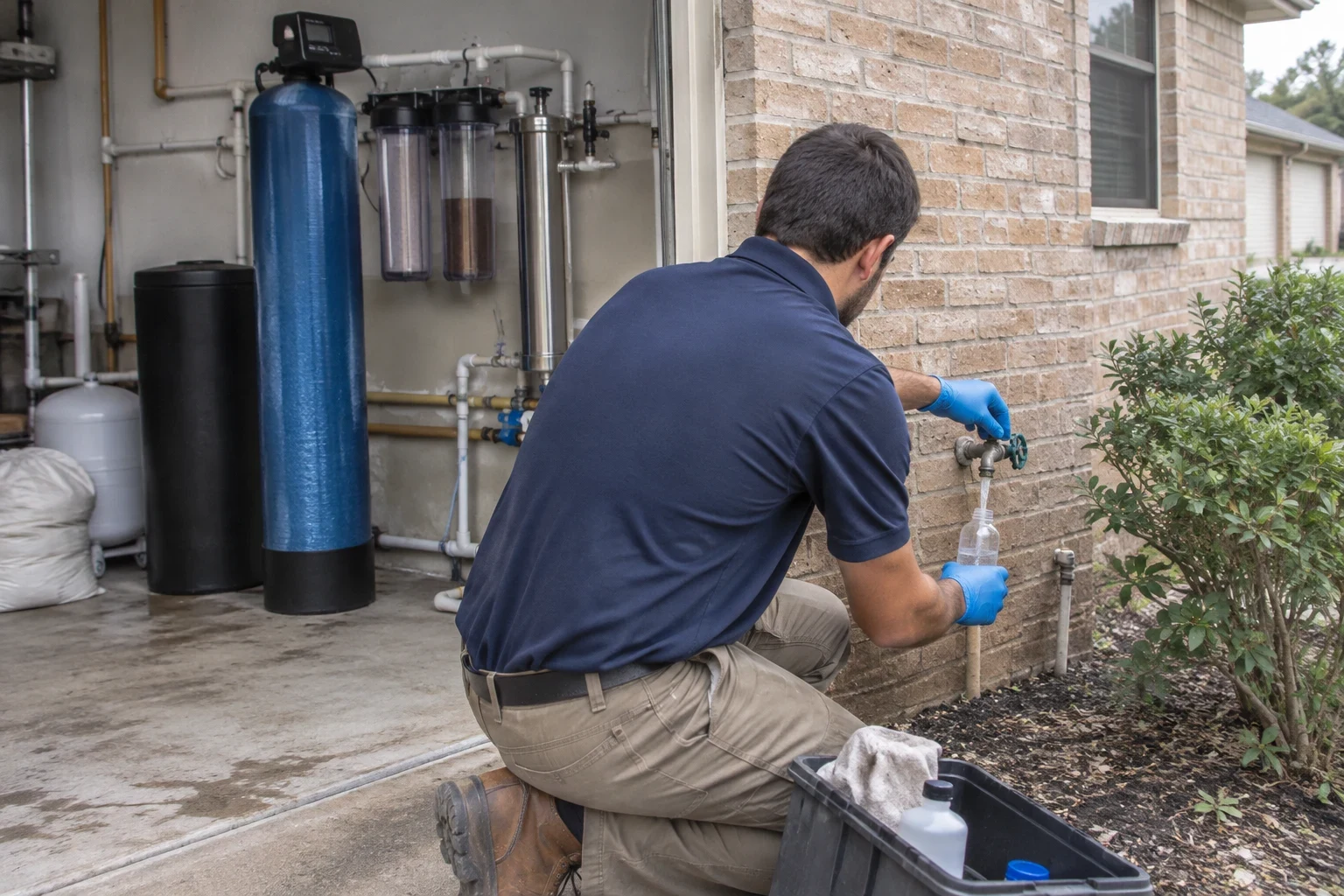
Free water test
We draw samples from an untreated tap and test on the spot, then walk you through each reading and what it means for your pipes and appliances.
- 3
Your options and quote
We lay out one or two systems that fit the results, with what each removes, what it costs to run and how often it needs service. There is no pressure to pick that day.
- 4
Install day
We shut off the main, cut in the bypass and system, run the drain line if one is needed, then flush the media until the water runs clear. Your water is usually off for a few hours.
- 5
Startup and handoff
We set the control valve, retest the treated water so you can see the change, and show you how to bypass the system and when to replace filters or add salt.
Where We Install
Our base is Buda, and our installs reach homes across the surrounding area. Regular stops include Kyle, San Marcos, Shady Hollow, Belterra and Dripping Springs. We also work in Wimberley, Lockhart, Bee Cave, Barton Creek and West Lake Hills.
- Buda
- Shady Hollow
- Kyle
- Belterra
- San Marcos
- Lockhart
- Dripping Springs
- Bee Cave
- Barton Creek
- West Lake Hills
- Wimberley
If you're unsure whether we reach your street, mention your town on the phone and you'll get a clear yes or no right then.
About Buda Water Filtration
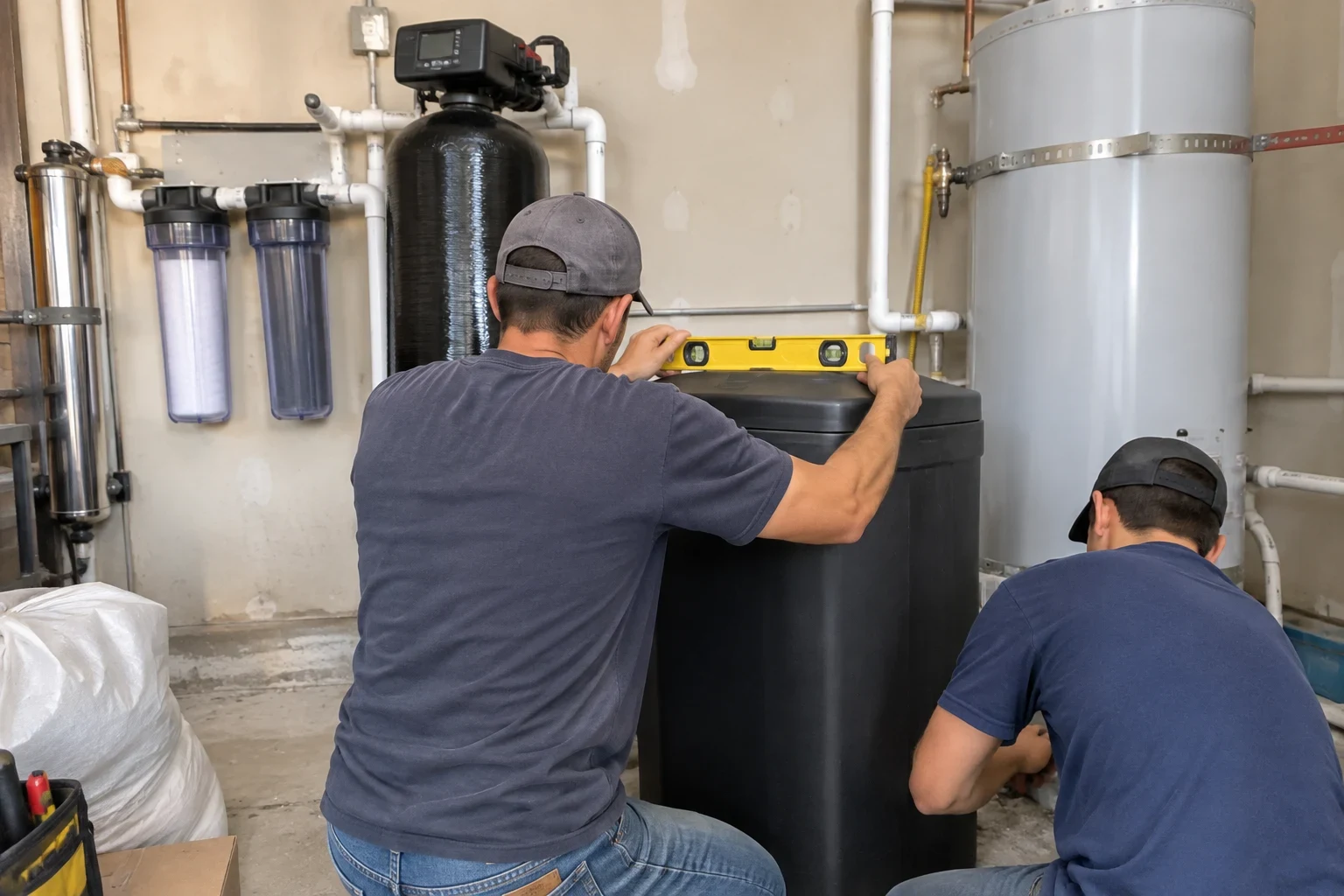
Buda Water Filtration puts treatment equipment into homes across Buda and the nearby towns, then keeps it running. The job has three parts: learn what your water carries, install the system that handles it, and clean up so the utility area looks better than when we arrived.
Much of Central Texas water picks up calcium and magnesium as it moves through limestone. Those minerals settle out as scale on heating elements, inside tankless heat exchangers and around showerhead nozzles. Scale behaves like a layer of insulation, so your heater burns longer to bring water up to temperature. Treating hardness is one of the rare upgrades that improves both comfort and running costs, and we say plainly when it will pay off and when it won't.
Common Water Questions From Buda Homeowners
Something not covered here? (512) 975-3164
Softener or salt-free conditioner: which one fits my home?
Your hardness reading and the result you want decide it. A softener trades calcium and magnesium for sodium inside ion-exchange resin, so the water feels slick and glassware dries without spots, but it needs salt, a drain and water for each regeneration. A salt-free conditioner changes the minerals into tiny crystals that are far less likely to stick as scale, and it runs without salt, a drain or power, though the water will not feel slippery. We test first and tell you which one makes sense for your home.
Will treating hard water lower my energy use?
It can. Scale builds up on water heater elements, across tank bottoms and inside tankless heat exchangers, and that mineral layer slows the transfer of heat, so the burner or element runs longer for the same amount of hot water. Keeping scale off lets the heater stay closer to the efficiency it had when new. We won't promise a dollar figure on your bill, because that depends on your heater and how much hot water your household uses.
Why does my tap water taste like chlorine?
Utilities add chlorine or chloramine so the water stays disinfected over miles of mains on its way to your home. It does real work, but many people dislike the smell and the aftertaste. A whole-home catalytic carbon filter removes both, so showers and every faucet improve, not just the kitchen sink.
How much water does a reverse osmosis system send to the drain?
An RO membrane flushes part of the incoming water to the drain to carry away what it rejects, and the ratio depends on the model and your water pressure. Adding a permeate pump or choosing a higher-efficiency unit cuts that reject water noticeably. We show you the rated ratio for any system we quote.
What warranty comes with the equipment?
The equipment is covered by a lifetime warranty on tanks and ceramic discs, 5 years on the control valve, circuit board and filter media, and 1 year on labor. With your quote, we note which parts of your system fall under each of those terms.
How often do filters and media need replacing?
Sediment and carbon cartridges are usually swapped based on gallons used and how much they are catching. Softener resin and conditioner media last far longer, and a UV lamp is typically changed once a year. Your quote lists the service schedule for each part so you can plan the cost.
Is installation really free?
Yes, free installation is a standing offer. Your quote spells out the equipment and any plumbing changes your home needs, such as a new drain line or moving the tie-in on the main to a better location, so nothing new comes up on install day.
Find Out What Your Water Needs
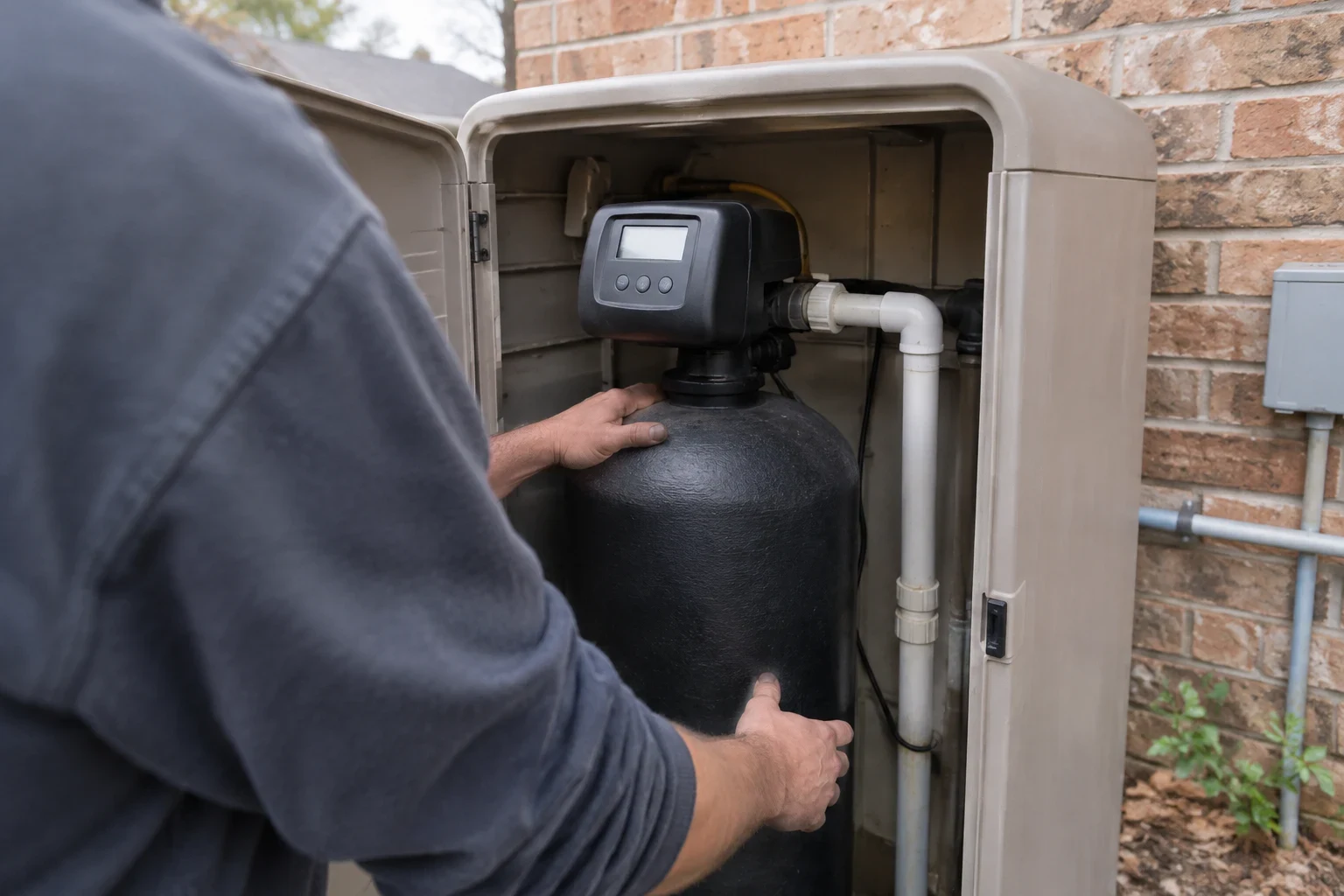
A short visit and a few readings will tell us whether you need filtration, softening or nothing at all. You will hear the options and their running costs before you commit to anything.