ServicesUV Water Purification
UV Water Purification in Buda
We install ultraviolet disinfection systems that inactivate bacteria, viruses and cysts as water passes a sealed lamp. Nothing is added to your water and nothing goes down the drain. We size the unit to your home's flow rate and set up the pre-filtration it needs to work.
How UV disinfection works, and when it is the right call
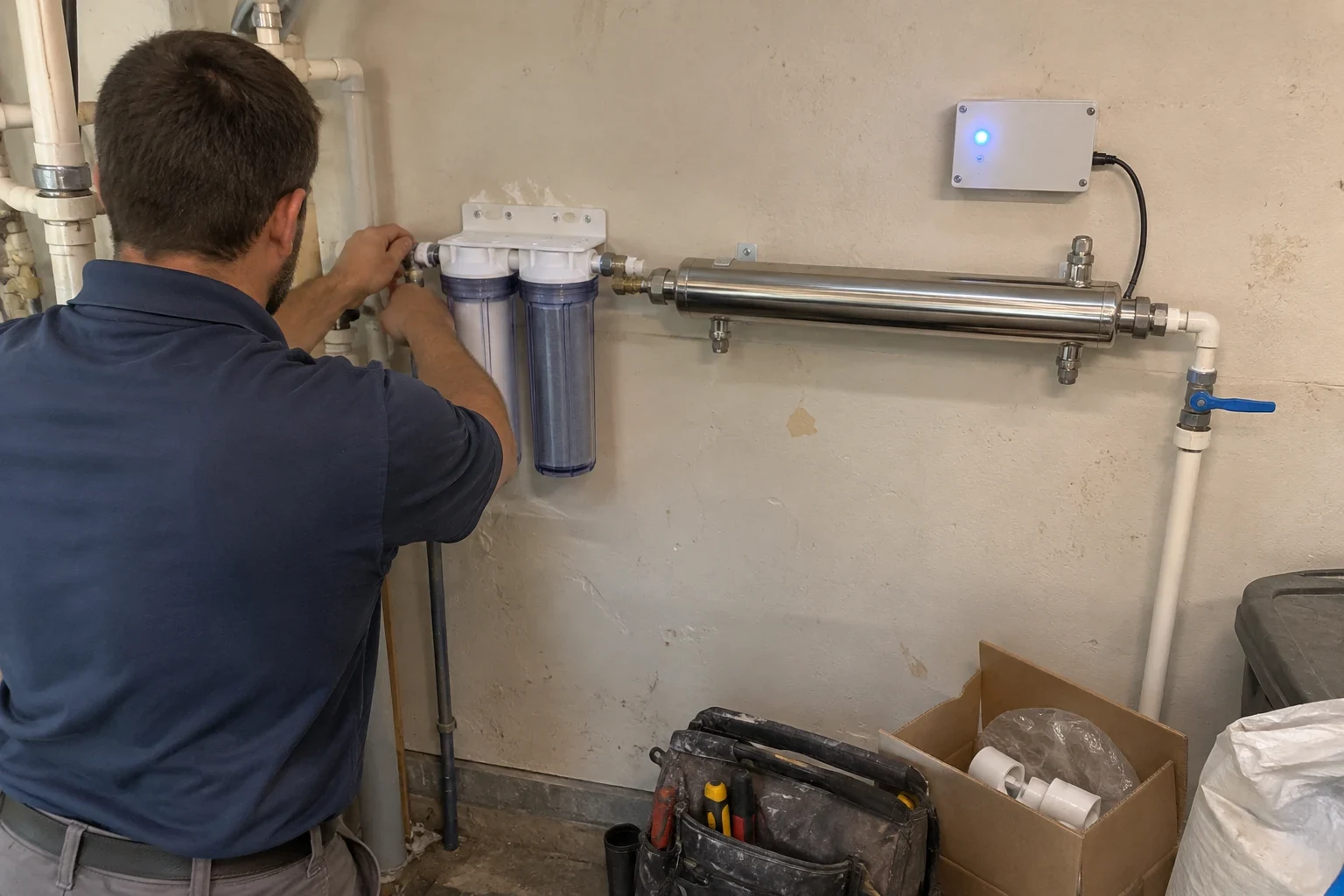
A UV system is a stainless steel chamber with a low-pressure mercury lamp inside a quartz sleeve. Water flows around the sleeve, and UV-C light at 254 nanometers damages the DNA of microorganisms so they cannot reproduce or make you sick. It does not filter anything out. It does not remove chlorine, lead, hardness or iron, and it does not change taste or odor.
That makes UV a specialist tool. It fits homes that want a microbial barrier without adding chlorine, homes on a private well, and homes that want a backup layer behind a whole-home filtration or reverse osmosis system. On treated city water it is extra assurance rather than a necessity, and we will tell you that plainly after your water test.
On running costs, UV is one of the lightest systems you can own. The lamp draws roughly what a household light bulb does, there are no chemicals to buy, and unlike reverse osmosis it sends no water to the drain.
What a UV installation includes
- 01
Sizing to your flow rate
We size the chamber by the peak demand your plumbing can draw, measured in gallons per minute. When a shower, the washer and the dishwasher run together, water moves faster, and a chamber rated too low lets it exit before it has absorbed a full UV dose.
- 02
Sediment pre-filter
A 5-micron sediment cartridge goes ahead of the chamber. Particles can shade microbes from the light, so clear water is what makes the dose count.
- 03
Hardness and iron protection
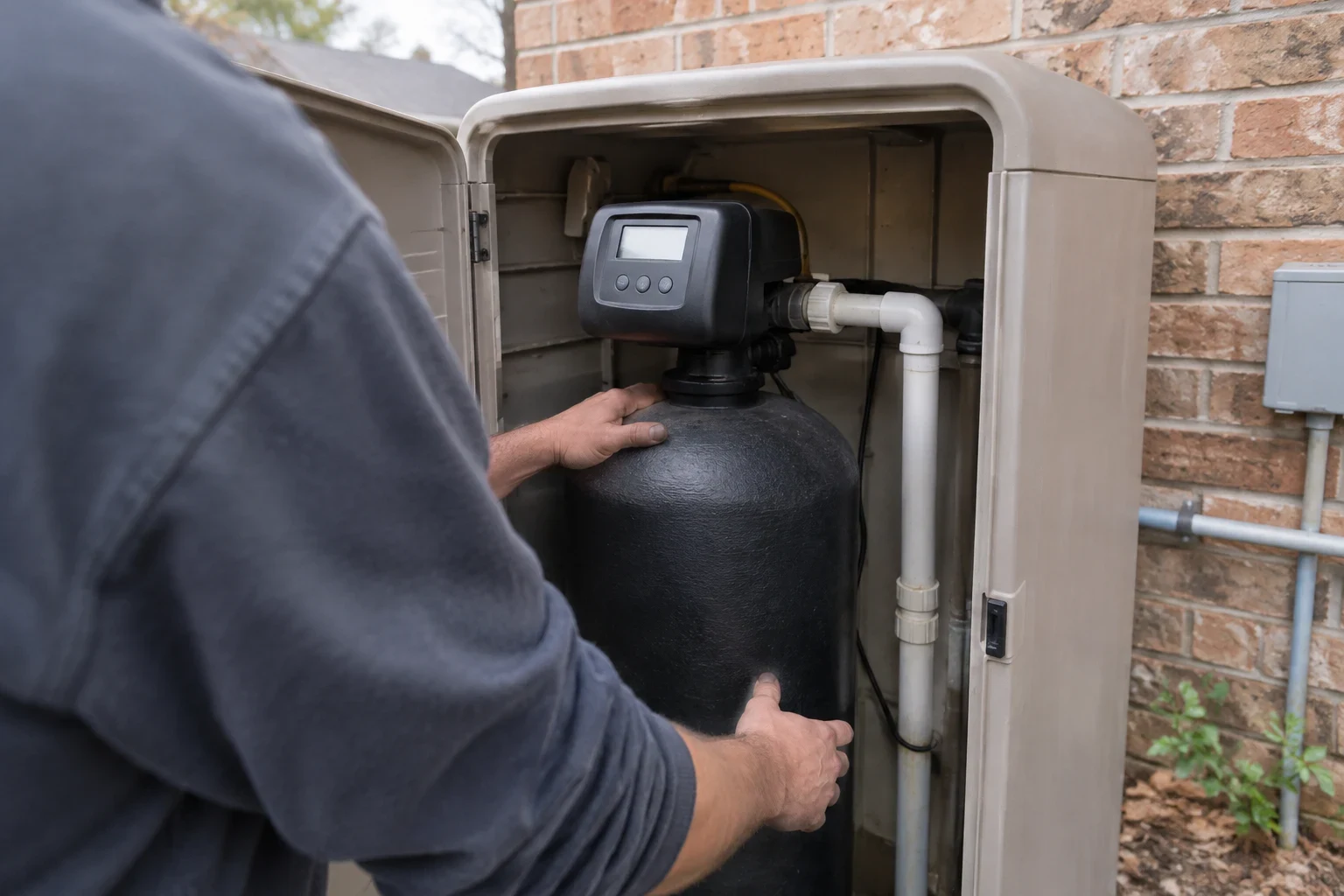
Central Texas water tends to run hard, and calcium can bake onto a warm quartz sleeve and block the light. If your test shows high hardness or iron, we pair the UV unit with a softener, conditioner or iron filter so the sleeve stays clear.
- 04
Controller with lamp alarm
The ballast powers the lamp and alerts you if it fails or reaches the end of its rated life. Some models add a UV intensity sensor that reads how much light is actually reaching the water.
- 05
Bypass valve and line disinfection
We plumb a bypass so the unit can be serviced without shutting off your home's water. After installation we disinfect the downstream pipes once, since UV only treats water as it passes the chamber.
Questions about UV Water Purification?
Call(512) 975-3164Signs UV purification may be worth a look
Positive coliform result
A lab test showing total coliform or E. coli is the clearest reason to add UV, after the source of the contamination is checked.
You use a private well
Well water gets no disinfection from a utility. UV is a common final step, and our well water filtration and treatment page covers the filters that usually come before it.
You want no added chemicals
Some homeowners prefer not to add chlorine or other disinfectants at the house. UV treats the water with light alone.
Worry during boil notices
If you want an extra barrier for times the public supply is under a precautionary notice, UV can help, though it still needs power and clear water to work.
A family member is at higher risk
A newborn, an aging parent or someone whose immune system is weakened by illness or treatment may make a microbial safeguard worth adding. Ask their physician about it as well.
How the job runs
- 1
Free water test
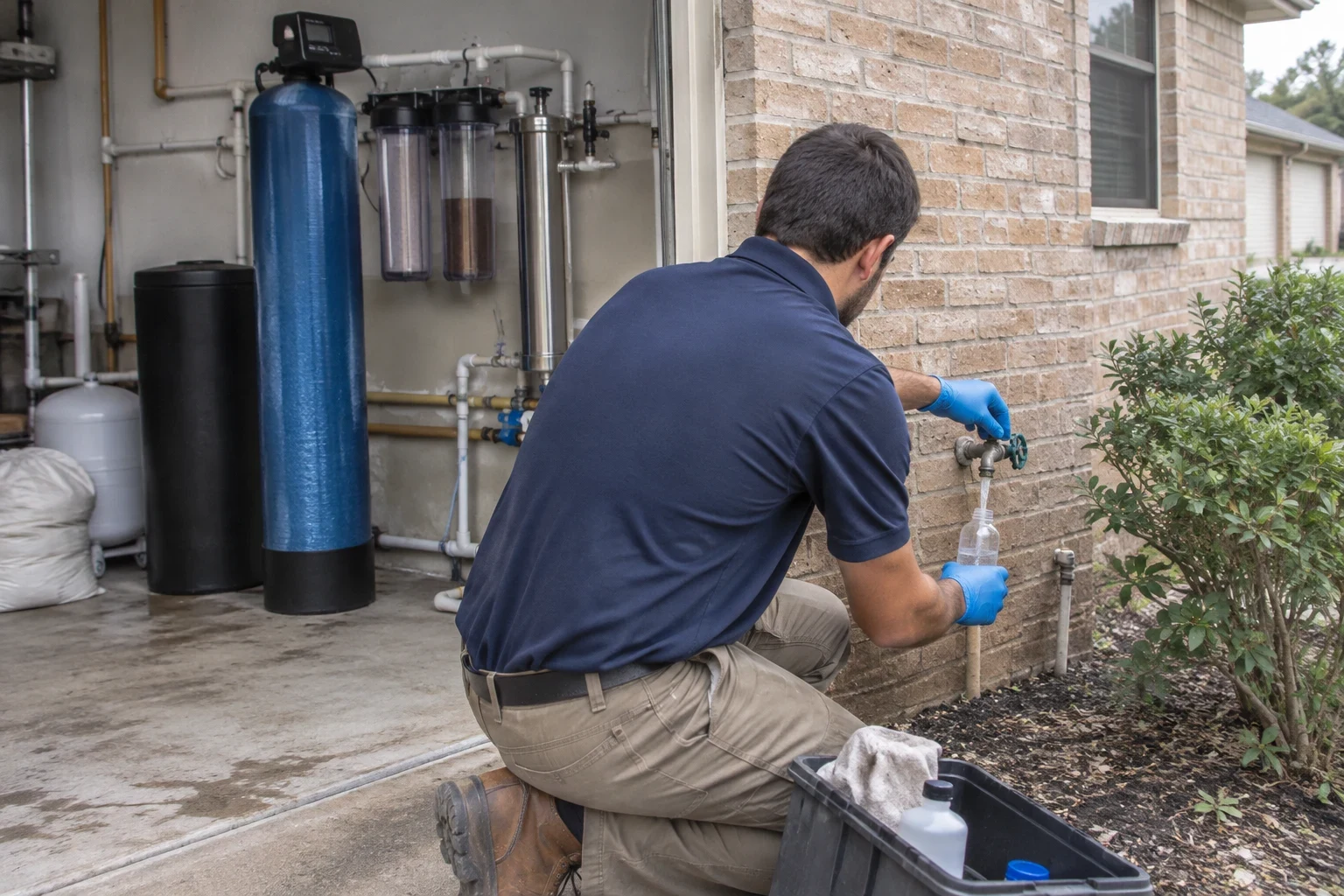
We check hardness, iron, turbidity and manganese, since all four affect how well UV works. If bacteria are the concern, we recommend sending a sample to a lab for a bacteria test and go over the result with you.
- 2
Written recommendation
You get a plain answer on whether UV makes sense, which chamber size fits your flow rate, and what pre-treatment it needs. If you do not need UV, we say so.
- 3
Installation day
We mount the chamber on the main line after any softener or filter, add the sediment housing and bypass, and plug the controller into a grounded outlet near the equipment. Most installs fit in one visit, and we clean up before we leave.
- 4
Startup and handoff
We flush and disinfect the downstream plumbing, confirm the lamp is running, and show you the alarm, the bypass and how to swap the lamp and pre-filter.
What moves the cost of a UV system
The price depends on the equipment and what your water needs before it reaches the lamp. We offer free installation, so your quote covers equipment and any pre-treatment, itemized by phone after your test.
- Chamber size
- Higher flow rates need a longer lamp and larger chamber to hold the dose at full demand.
- Pre-treatment
- Hard water, iron or high sediment may call for a softener, conditioner or iron filter upstream. Clear, soft water needs only the sediment cartridge.
- Controller features
- A basic ballast with a lamp-life alarm costs less than a unit with an intensity sensor and solenoid shutoff.
- Plumbing layout
- Where your main line enters, how much space is available and whether an outlet is nearby all affect parts and time.
- Ongoing upkeep
- Plan for a replacement lamp about once a year and regular sediment cartridges. Power use stays low, similar to leaving one light on.
UV purification questions
Will UV make my water taste better?
No. UV does not remove chlorine, minerals or the compounds behind odd tastes. If taste is your main complaint, whole-home filtration with carbon or an under-sink reverse osmosis system is the better match, and UV can be added alongside either.
How often should I change the UV lamp?
Plan on a new lamp every 12 months or so. A spent lamp still lights up, but its UV-C output fades below what a dependable dose requires, so a glowing lamp is no proof it is working. Swap it on the calendar and clean the quartz sleeve at the same time.
What happens if the power goes out?
The lamp shuts off and water passes through untreated. After power returns, the lamp restarts on its own. Some homeowners add a solenoid valve that stops flow when the lamp is off; we can explain whether that fits your setup.
Do I need UV on city water?
Usually not. Public water is already disinfected before it reaches your home. UV on city water is an optional extra layer, and our water test helps you decide whether it is worth it.
Does UV raise my electric bill much?
Very little. A residential lamp draws roughly what a standard light bulb uses and runs continuously, so it adds only a small amount to a monthly bill. It also uses no salt and wastes no water.
Find out if UV fits your water
We start with a free water test, then give you a quote with the right chamber size and any pre-treatment listed line by line. Installation is free.