ServicesWater Testing & Analysis
Water Testing & Analysis in Buda
We test the water coming into your home, show you each reading as we take it and explain what it means. Then you decide what, if anything, to do about it. No equipment gets recommended before the numbers support it.
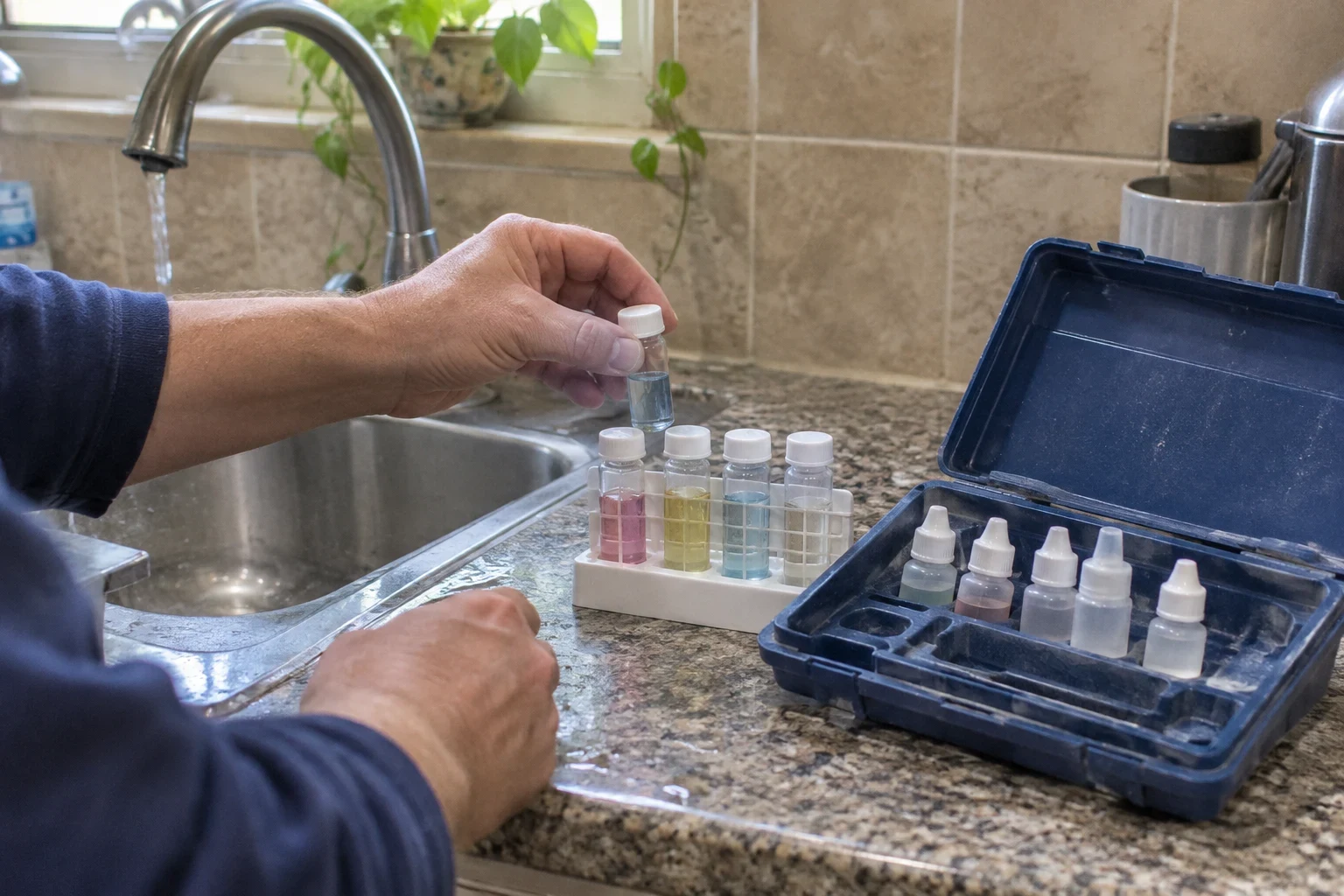
Know what is in your water before you buy anything
A water test answers a simple question: what is actually coming out of your taps, and is any of it causing a problem you care about. We measure hardness in grains per gallon, chlorine or chloramine residual, total dissolved solids, pH and iron. Each number points to a different fix, or to no fix at all.
Testing first keeps you from paying for the wrong system. A softener does nothing for chlorine taste. A carbon filter does nothing for scale. Reverse osmosis is the right tool for drinking water but the wrong one for a whole house. The readings tell us which of these fits, and which you can skip.
There is a running-cost side too. Hardness minerals in limestone country settle out as calcium carbonate scale when water is heated. That scale coats water heater elements and the bottom of tank heaters, so the burner or element works longer to heat the same water. A hardness reading tells you whether that is happening in your home and how much it is worth addressing.
What we measure during the test
- 01
Hardness, read in grains per gallon
A measured sample gets a titration reagent added one drop at a time until the color shifts, and the number of drops gives the calcium and magnesium content. That figure tells us whether a water softener or a salt-free conditioner deserves a look, and how much capacity either one would need.
- 02
Chlorine and chloramine residual
Utilities dose the supply with a disinfectant so it stays safe on the way through the mains. The same disinfectant is usually behind a pool-like taste or smell. Knowing the residual lets us size carbon media properly, because chloramine needs longer contact time than free chlorine.
- 03
Total dissolved solids and pH
A TDS meter reads the total mineral load, and pH shows whether the water tends toward corrosion or toward scale. Read together, those two numbers account for much of the spotting on glassware and the wear on fixtures.
- 04
Iron and manganese
Small concentrations of either metal can leave orange or brown marks in toilets, tubs and laundry. We test for both so a stain gets pinned to its actual cause.
- 05
Written results you keep
Every reading goes on paper next to its normal range, and the sheet stays with you. It gives you a fair baseline if you want to compare quotes from other companies.
- 06
Lab referral when it is needed
A field kit cannot reliably answer some questions, and lead from older plumbing is one of them. For those, we tell you plainly that a lab is the right tool and show you how to collect a clean sample to send out.
Questions about Water Testing & Analysis?
Call(512) 975-3164Signs your water is worth testing
Chalky rings on faucets and showerheads
As water dries on a fixture, the calcium carbonate it carried stays behind as a white film. When that film returns a few weeks after you scrub it off, hardness is probably high enough to be worth measuring.
A water heater that pops or rumbles
Mineral scale and sediment on the bottom of the tank trap pockets of water, and the sound you hear is that water boiling into steam. It also means the heater spends extra energy forcing heat through a layer of minerals.
Spots on dishes and glassware
A cloudy film left after a dishwasher cycle usually traces back to hardness or a high dissolved solids reading.
A pool smell at the kitchen tap
If tap water tastes like a swimming pool and you keep buying bottled water instead, a residual reading tells us which carbon media will remove that taste.
You are shopping for a system
Get the readings before you buy a softener, filter or reverse osmosis unit from anyone. Real numbers are the only fair basis for sizing equipment and comparing offers.
How a test visit runs
- 1
Schedule by phone
Tell us what you have noticed, such as scale, taste or stains, and we set a time that works. That conversation helps us bring the right test reagents.
- 2
Sample at the right taps
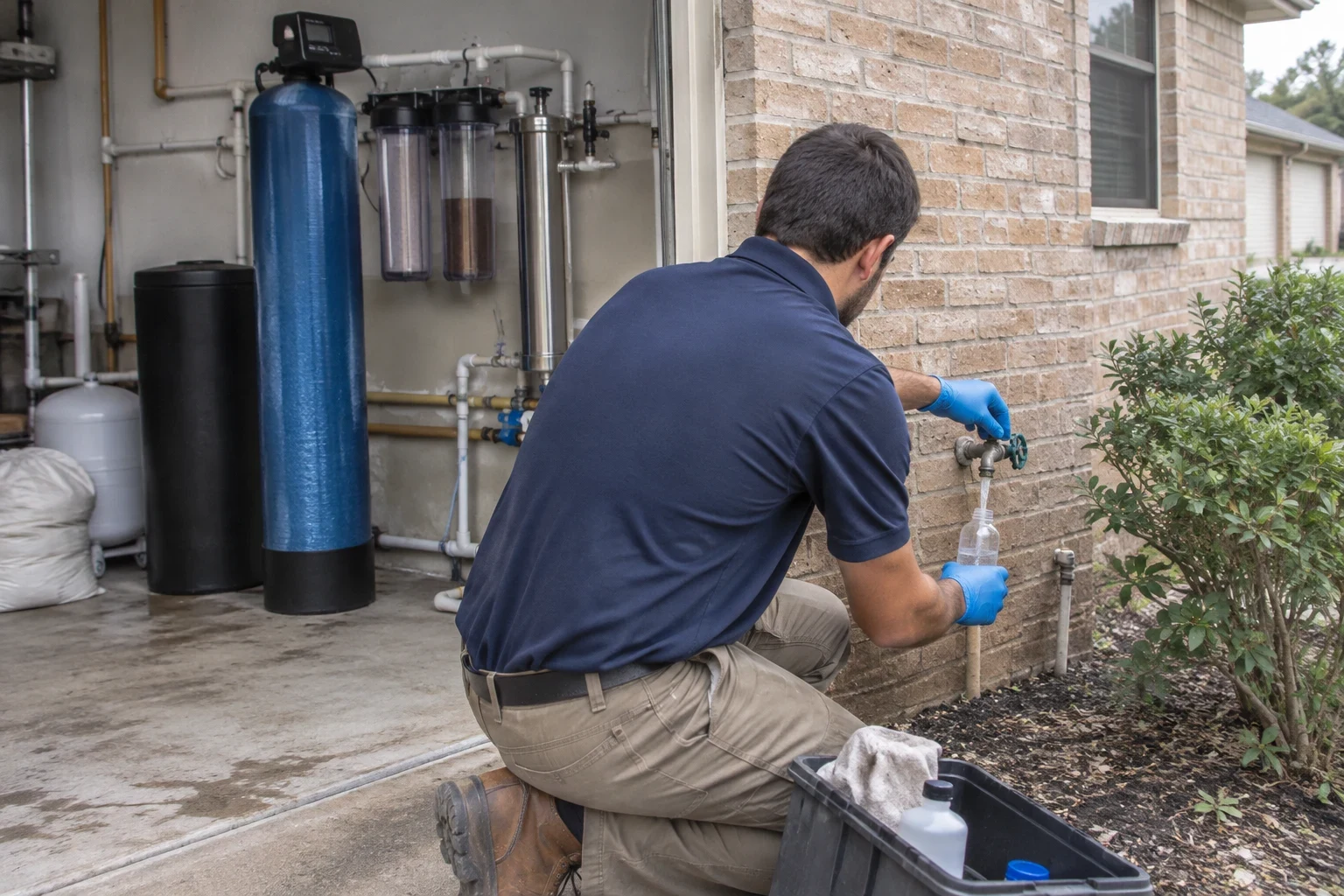
We draw water from the kitchen faucet and, where possible, an outdoor spigot near where the main line enters. Comparing the two shows whether a problem comes from the supply or from plumbing inside your home.
- 3
Run the tests in front of you
Hardness, chlorine, TDS, pH and iron are measured on the spot, usually in well under an hour. You watch the color changes and meter readings as they happen.
- 4
Explain the results
We go through each number, what is normal and what it affects in your home. If nothing needs treatment, we say that.
- 5
Quote only if you ask
When equipment would help, we name the system, show you which readings point to it and write up a quote that lists each part on its own line. If you would rather think it over, the written results stay with you.
What affects the cost after your test
The in-home water test itself is free, with no obligation. What a solution costs afterward depends on what the readings show and how your plumbing is laid out. We also offer free installation on the systems we quote.
- How hard the water is
- Higher grains per gallon call for a larger resin tank or conditioner so the system keeps up between regenerations.
- Household size and flow rate
- More bathrooms and more people running water at once mean larger valves and media beds to avoid a pressure drop.
- What the test finds
- Treating hardness alone is simpler than treating hardness, chloramine and iron together, which may need two stages.
- Plumbing access
- A home with an existing loop in the garage is quicker to connect than one where the main line has to be opened and re-routed.
Water testing questions
Is the water test really free?
Yes. We visit your home, run the tests and go over every result without charging you. Nothing obligates you to buy, and when the readings show your water is fine, that is exactly what we report.
My city water already meets standards. Why test it?
Meeting drinking water standards is about safety, and public systems generally do that well. Hardness, chlorine taste and scale are not safety violations, but they affect how your water tastes, how your appliances wear and how much energy your water heater uses. Testing shows which of those apply to your home.
Can you test for lead?
Accurate lead measurement takes laboratory equipment, so we do not trust a field kit for it. If your home has older plumbing or you have a specific worry, we show you how to collect a first-draw sample, the water that sat in the pipes overnight, and send it to a lab for analysis.
Will you just recommend a water softener?
Only if your hardness reading supports it. Moderate hardness may be better served by a salt-free conditioner, and a taste problem is a carbon filtration question, not a softener question. The readings drive the recommendation.
Does hard water really raise energy costs?
Scale is a poor conductor of heat. As it builds on electric elements or the bottom of a gas tank, the heater runs longer to reach temperature, and tankless units lose efficiency as the heat exchanger scales up. How much it matters depends on your hardness, which is exactly what the test measures.
How long does the visit take?
Most tests and the walk-through of results take under an hour. If you want a quote for a system, we can write it up during the same visit.
Get the numbers on your water
A short visit gives you real readings for your home and a straight answer on whether anything needs fixing. Call to set up your free test.